

The barrel drum itself, slung from the shoulder and struck with two canes. Uploaded to Wikimedia by a Bengali contributor who recorded it for exactly this purpose: to show what a dhak sounds like at a Durga Puja. Two minutes of it, which is long enough that the loop stops announcing itself.
“Rhythm of Dhak…” by Sumita Roy Dutta, via Wikimedia Commons, CC BY-SA 4.0গান Music
One tap, and the Pujo is on
এক গান, এক আড্ডা, এক শরৎ
A shelf chosen by the clock in Kolkata, playing by itself, the way a radio in a tea shop does. Underneath it, eleven faders of dhak, conch, rain and river, so you can build the room the songs are playing in. No signing in, nothing to install.
এখন বাজছে Now playing
দুপুরAfternoon by the river in Kolkata
গৌরী এলো
Gouri Elo
Dohar, led by Kalikaprasad Bhattacharya
Gouri has come, go and look at her. Dohar sing Agomoni the way a village actually sings it, with hand percussion and no ceremony whatsoever.
Press once and it keeps going. Track 1 of 27 on this shelf. The shelf follows the clock in Kolkata until you pick one yourself.
DOHAR FOLK
আবহ
The sound desk
Underneath the songs, the room itself. Eleven recordings on eleven faders. Nothing plays until you press the disc.
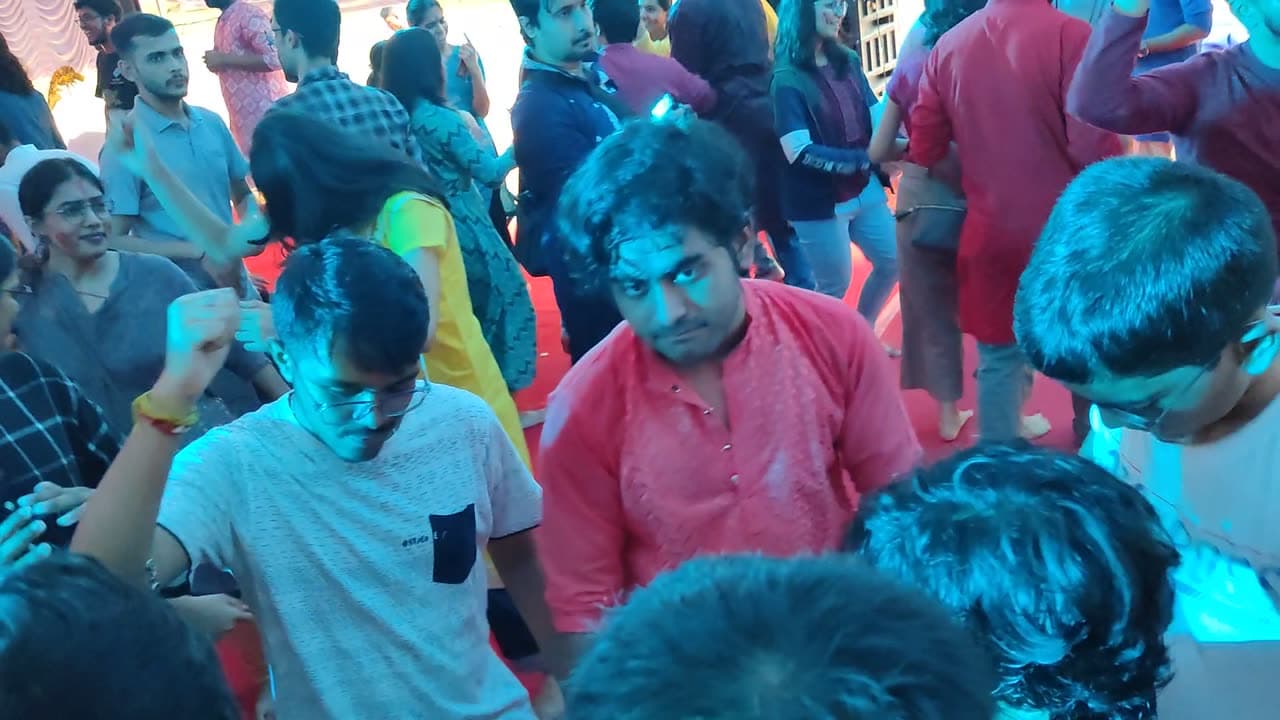
ভিড়Five days on this ground, one after another
silent
এগারোটি শব্দ · দুশো এক গান · একটি ঘর
Eleven sounds, two hundred and one songs, one room
6 of 11 layers open.
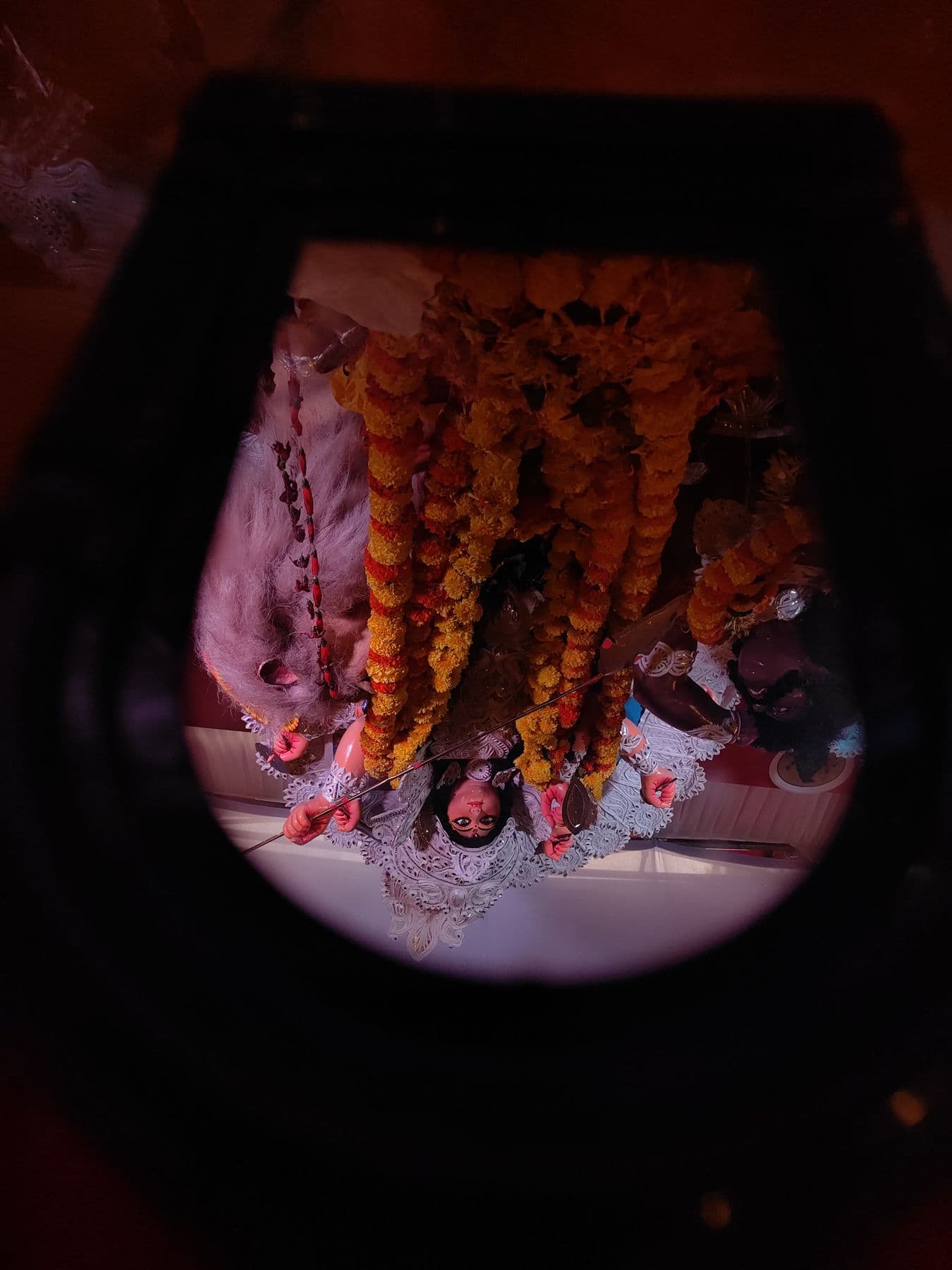
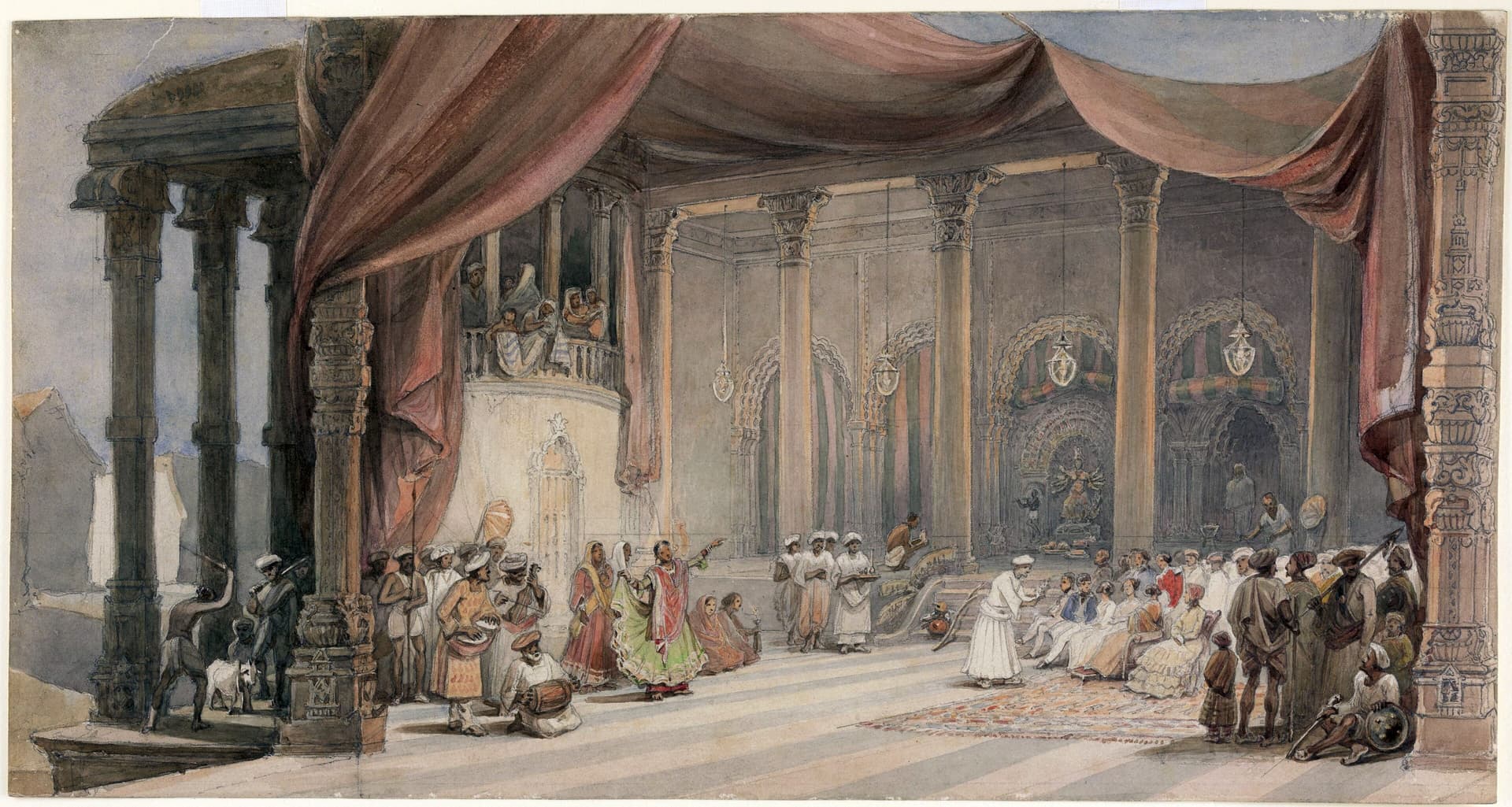
এই গানগুলো এখানেই বাজে
These are the songs that play here
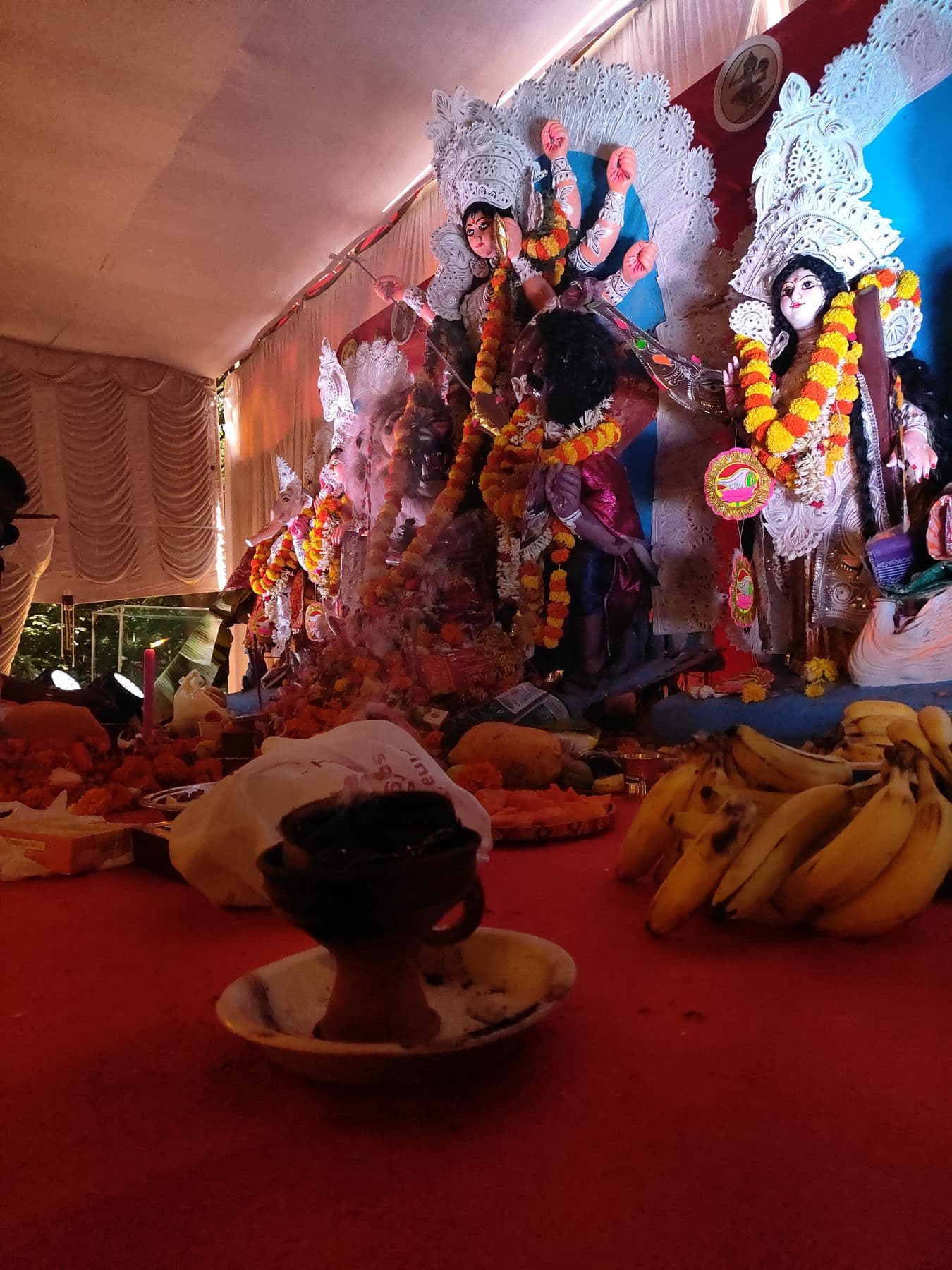
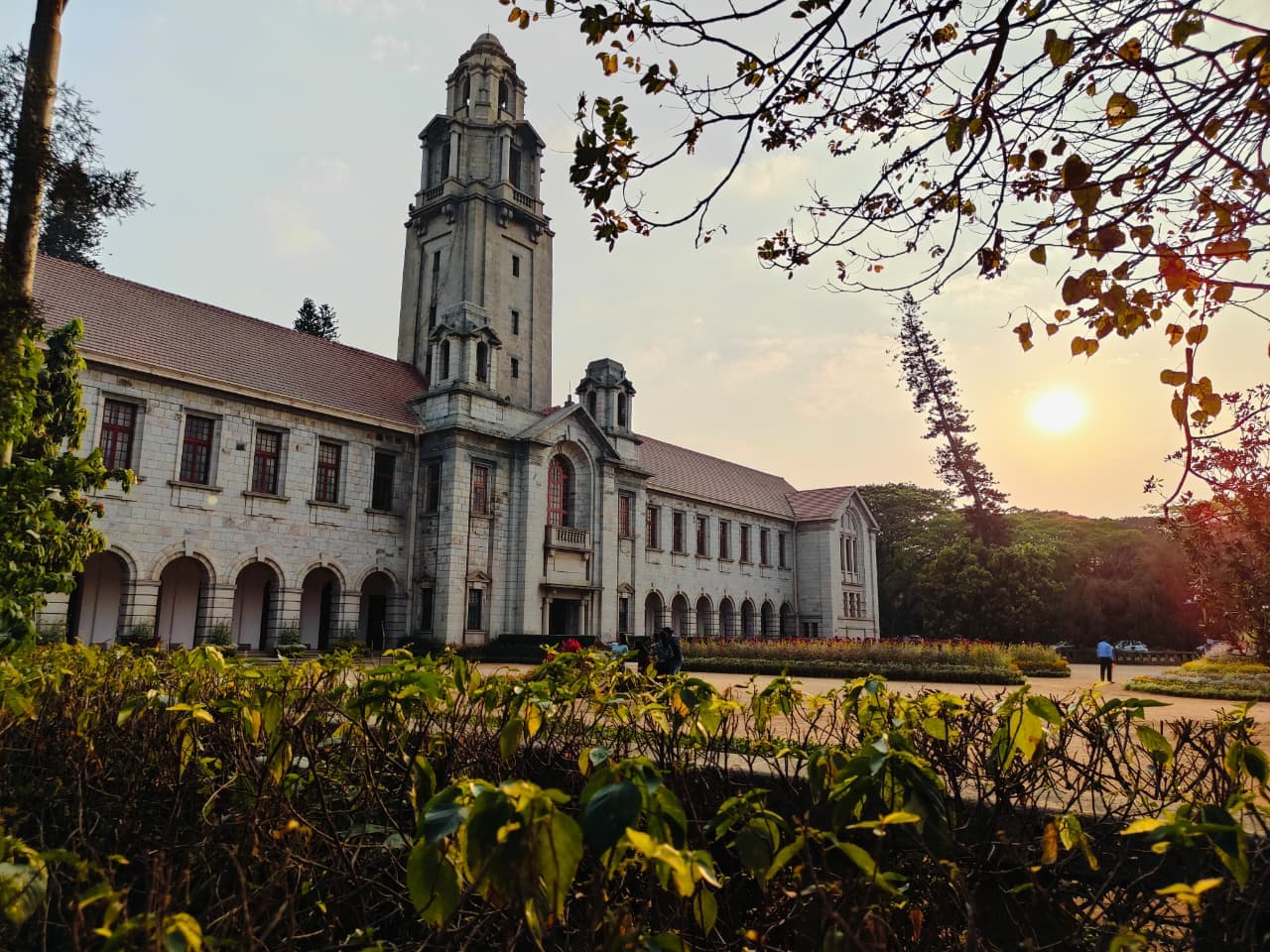
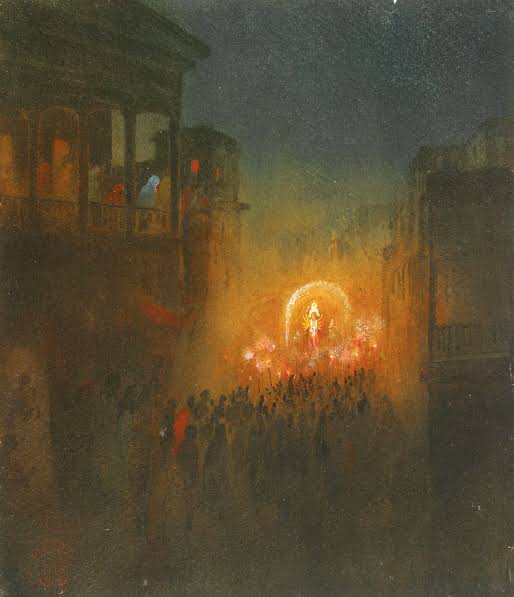
Last year's cultural evening on this ground, with the same repertoire the shelves above carry. The Pujo sounds the same on a Bengaluru campus as it does in a north Kolkata lane and in a village where the pandal is bamboo and the river is the Ganga. That is the entire argument of this page.
কোথা থেকে Where these came from
Recorded at a real Puja, by people who said we could
Every layer is CC0 or Creative Commons Attribution, checked one at a time. The dhak was recorded in Kolkata on Dashami with dhakis from Barasat. 11 of 11 are served from this site; the rest stream from where they were published.
A struck bell-metal gong, standing in for the kansar, the flat disc beaten during arati. It is not a kansar and we are not going to pretend it is. No recording of one exists under any licence we can use.
A stand-in. This is a generic bell-metal gong, not a Bengali kansar.
“Gong or Bell, vibrant” by stephan, originally from pdsounds.org, public domain, via Wikimedia CommonsA conch, blown once. Six and a half seconds, which is all a conch is, and the reason this fader sets how often it sounds rather than how loudly it drones. Recorded for the Wikipedia article on conches.
“Conch shell” by David Bolton (User:Dbolton), via Wikimedia Commons, CC BY 2.5Temple bells in Delhi, recorded for the radio aporee sound map. Irregular, overlapping, a dozen hands at once, which is what a temple actually sounds like and what a single sampled bell never does.
“14, New Moti Bagh, New Delhi, Delhi 110023, India – 09 Temple bells” by Piotrek Zyla, radio aporee ::: maps, via the Internet Archive, Public Domain Mark 1.0Krishnarajendra Market in Bengaluru: several hundred people talking at once, none of them to you. The nearest thing to pandal adda that exists under a licence we can use, and recorded in this city, which feels right for a Puja held in it.
“Bangalore, Krishnarajendra-market, City market” by François-Emmanuel Fodéré, radio aporee ::: maps, via the Internet Archive, CC BY-SA 3.0Summer rain and a storm, recorded in Kolkata. Not rain in general; rain there. Seven minutes of it in the original, trimmed here to three.
“Chittaranjan Colony, Kolkata, West Bengal, India – Summer rain and storm” by Sukanta Majumdar, radio aporee ::: maps, via the Internet Archive, Public Domain Mark 1.0Bells, chanting and a crowd together at a math in Hubli on Maha Shivaratri. A different festival and a different state, but the sound of an evening arati is the sound of an evening arati.
“Hubli, Sri Gurunathrudha Swami Math, Bells & Co” by François-Emmanuel Fodéré, radio aporee ::: maps, via the Internet Archive, CC BY-SA 3.0Bathing in the Ganga at Varanasi. Water, steps, distant voices. The river this festival ends in, recorded a long way upstream of where it ends.
“varanasi: by the ghats – Bath in the Ganga river (Varanasi)” by antonixfelinski, radio aporee ::: maps, via the Internet Archive, Public Domain Mark 1.0Evening beside a pond in Bhului, West Bengal, in the monsoon. Crickets, frogs and insects, dense and close. The recordist's own filename says it better than we can, and this is the most regionally exact thing on the desk.
“Bhului, Jot-Sriram, West Bengal 722143, India – Bhului, Evening, Monsoon” by Prabuddha Mukhopadhyay, radio aporee ::: maps, via the Internet Archive, Public Domain Mark 1.0The Guru Stotram, chanted in Sanskrit. Released into the public domain by whoever recorded it, which is a generous thing to have done.
“Sanskrit Chanting Guru Stotram” chanted by Swami Atmananda, via Wikimedia Commons, CC0 1.0 (no attribution required, but credit is courteous)A sustained Indian drone, released under CC0. It is labelled drone rather than tanpura because the person who uploaded it wrote only "loop like indian drone", and nobody here has been able to confirm whether it is a played instrument or a synthesised one. Calling it a tanpura would be a guess with a confident face.
Labelled drone, not tanpura. Nobody has confirmed the instrument.
“23 indian drone” by abeattie23, via the Internet Archive, CC0 1.0 (no attribution required)201 songs, and none of them ours
Every recording on the shelves belongs to somebody. Saregama, the artists, their estates. So each one plays from the rights holder's own upload, which means they get the view and we get to keep our conscience.
Each video was checked twice over: that it is the right recording, and that it permits embedding at all. About a quarter of the obvious uploads quietly do not, and fail silently inside a frame while playing perfectly on their own page.
Mahishasuramardini is the strictest case of all, and it has its own page with a radio on it.
What is missing, and why
উলুধ্বনি
Ulu-dhwani
No openly licensed recording of Bengali ululation exists on either archive.org or Wikimedia Commons. The only genuine ululation found was Egyptian, in a video container, and substituting it would have been a lie told in sound.
The kansar fader is a bell-metal gong standing in for one, and the drone is labelled drone because nobody has confirmed the instrument. Both say so on the desk.
Ten minutes of recording at this year's pandal, released into the public domain, would fix that for everyone who ever builds a page like this one. If you are coming with a phone, that is a genuinely useful thing to carry.
Volunteer for it