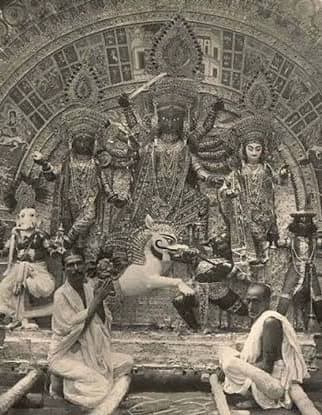
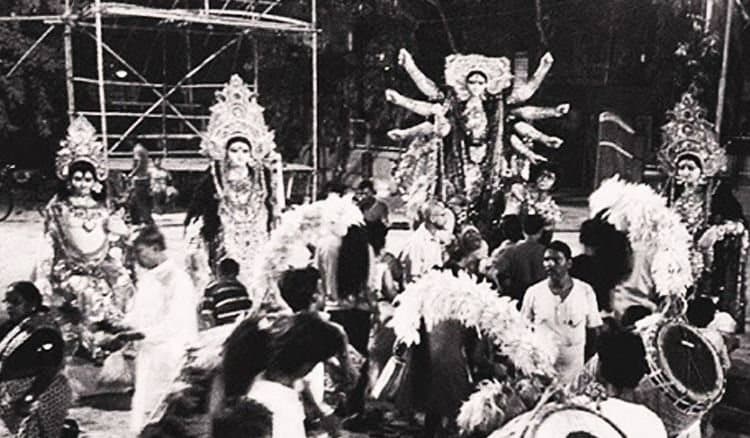
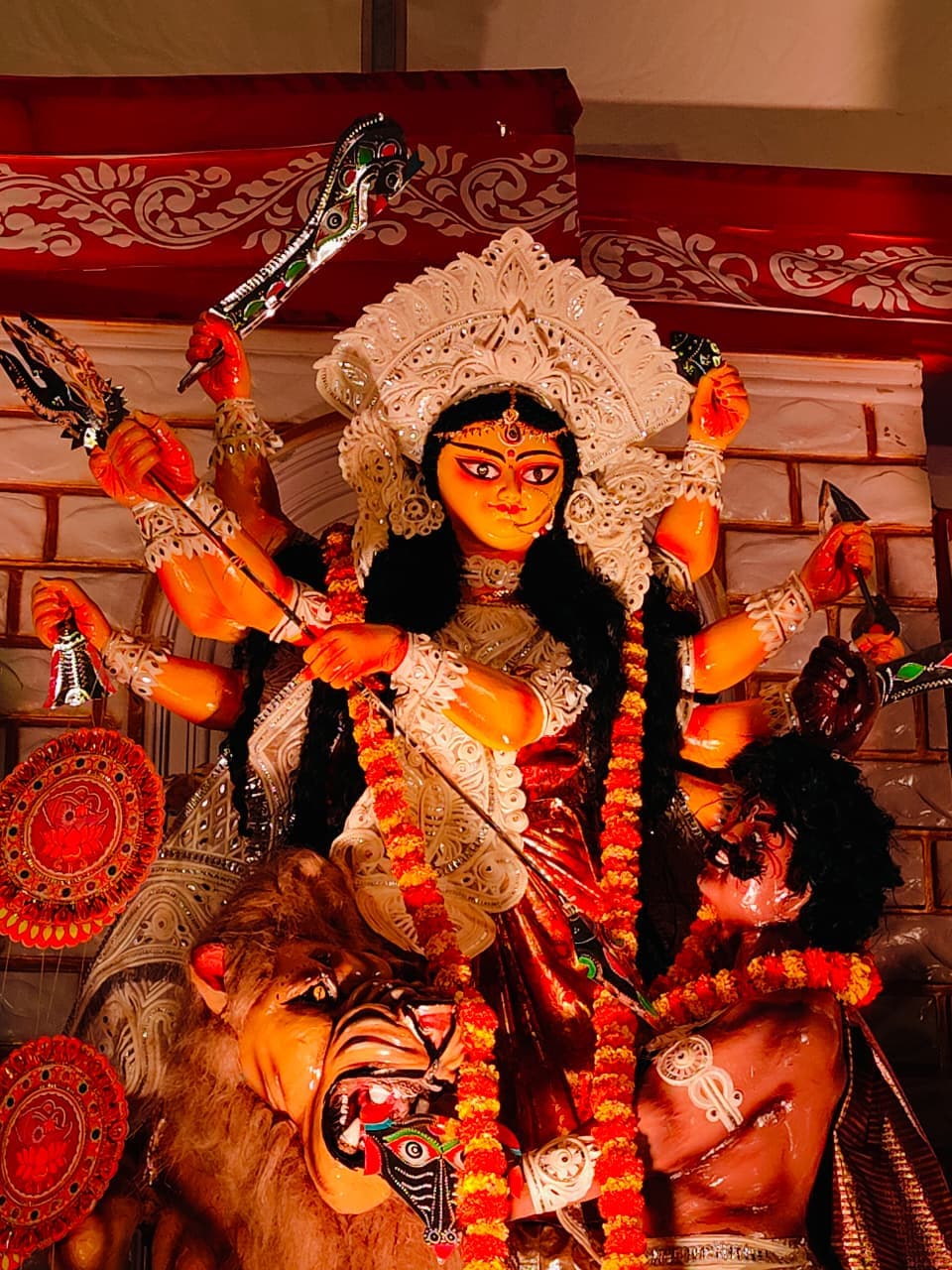
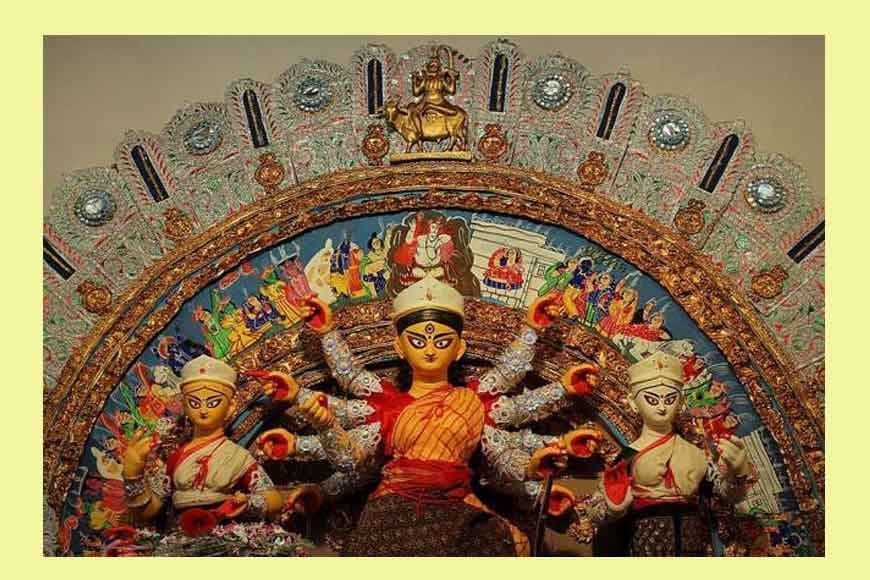
The turn came when pandals stopped imitating temples and started commissioning artists. Meera Mukherjee's 1990 Durga for Bakul Bagan, dressed in a Santhal sari, is the serious precedent; Bosepukur Sitala Mandir's breakthrough around the turn of the millennium is when the idea became a citywide competition. A pandal may now be built of jute, terracotta, bicycle parts or discarded plastic, and the bamboo scaffolding underneath is unchanged from a century ago.
The economics are not a side effect. A British Council study with Queen Mary University of London and IIT Kharagpur, from 2019 fieldwork, valued the creative economy around Durga Puja at ₹32,377 crore, about 2.58 per cent of West Bengal's gross domestic product.
In December 2021 UNESCO inscribed the festival on the Representative List of the Intangible Cultural Heritage of Humanity. The title is Durga Puja in Kolkata, not of India, because the nominating team argued that the specific civic form of the city was what deserved recognition.
And the rite keeps moving. In 2021 a Kolkata Puja was conducted start to finish by a team of women priests. Sindoor Khela has opened at many pandals to widows, single and transgender women. The festival has always been argued about; that argument is the tradition.
A local footnote, and not a small one. Bengaluru's first Sarbojanin Durga Puja was held in 1950, and the Bengalee Association's own history records that it took place under the initiative and tutelage of a few professors of the Indian Institute of Science. The association itself was registered nine years later, in 1959. The Puja on this campus is three years old. The Puja that came out of this campus is seventy-six.