Even the word is contested. The standard derivations are from Sanskrit vatula, mad, or vyakula, restlessly eager; Shashibhusan Dasgupta read both as pointing to ecstatic spiritual hunger. A Persian derivation from aul is also proposed, and recent work suggests a link to a Sufi branch called ba'al. The term appears in fifteenth- and sixteenth-century Bengali texts including Vrindavana Dasa Thakura's Chaitanya Bhagavata, but scholars dispute whether it there means anything sectarian at all or simply describes someone agitated.
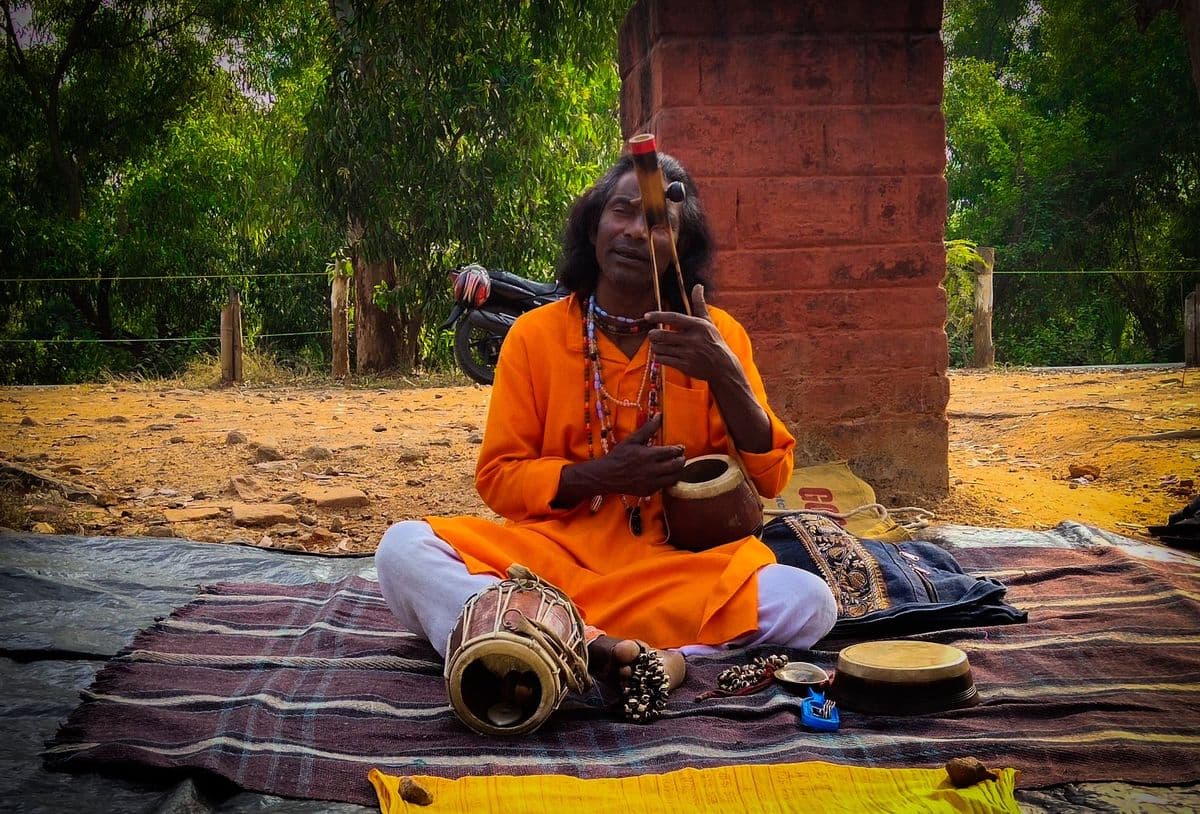
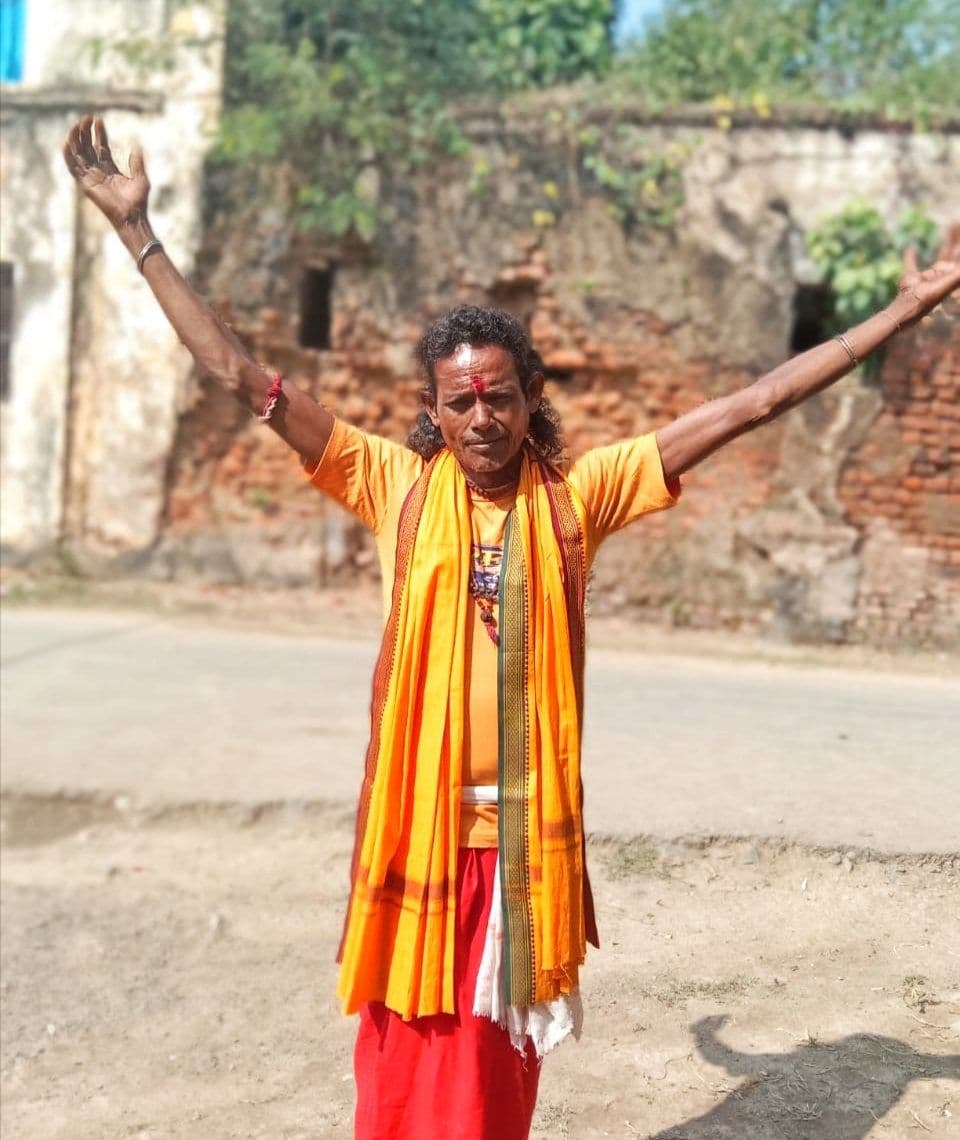
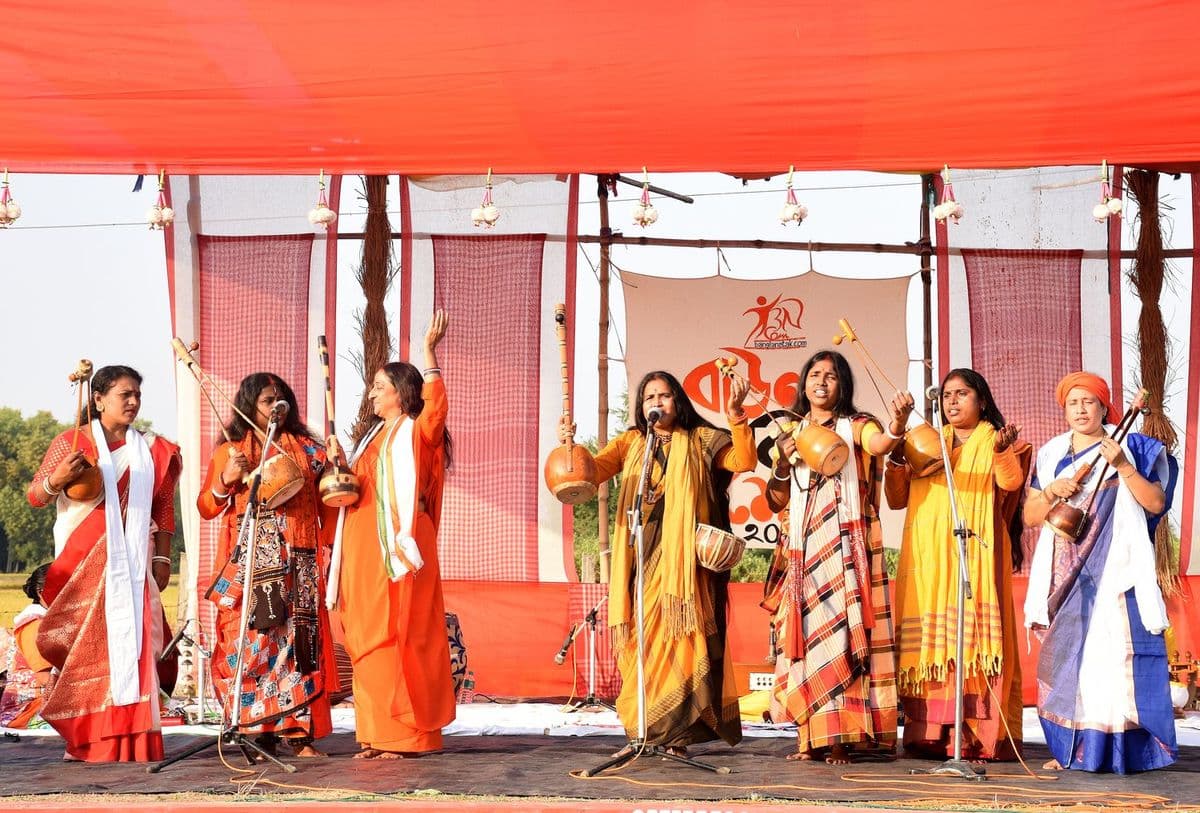
Bauls have no scripture, no temple and no lineage record, because the tradition is deliberately oral and initiatory. It draws on Vaishnava Sahajiya practice, Sufi thought, and tantric body-cosmology, and its central proposition is the moner manush — the person of the heart, sought inside the human body rather than in any institution. It is organised by guru and disciple, transmitted by diksha, and grouped into akhras and ashrams rather than sects that can be neatly listed; Hindu-affiliated Bauls and Muslim-affiliated Baul Fakirs share repertoire, and the related Darbesi, Nera and Kartabhaja groupings overlap.
The most celebrated figure is Lalon Fakir, conventionally 17 October 1774 to 17 October 1890, though those dates are traditional rather than documented. He wrote nothing down, and the collections appeared after his death. His akhra near Kushtia remains a pilgrimage site where thousands gather on his death anniversary.
The tradition was oral until the late nineteenth century, when outsiders began transcribing it, and that act of transcription changed it. Rabindranath Tagore did the most: he collected Baul songs, absorbed their metres into his own, lectured on them in Europe in the 1930s in what became The Religion of Man, and effectively introduced the Baul to the Bengali middle class as a philosopher rather than a beggar. The song of the postman Gagan Harkara supplied the tune for Amar Sonar Bangla, now Bangladesh's national anthem. UNESCO inscribed the Baul tradition of Bangladesh in 2005 among the Masterpieces of the Oral and Intangible Heritage of Humanity and confirmed it on the Representative List in 2008.