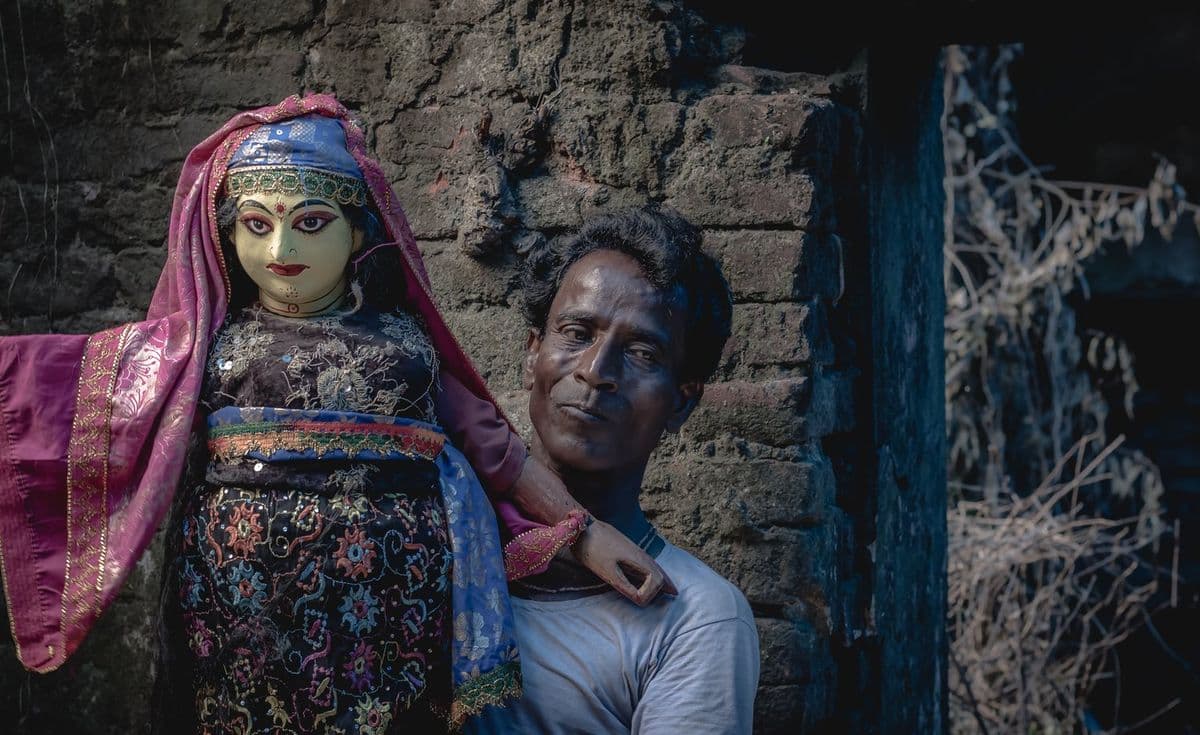
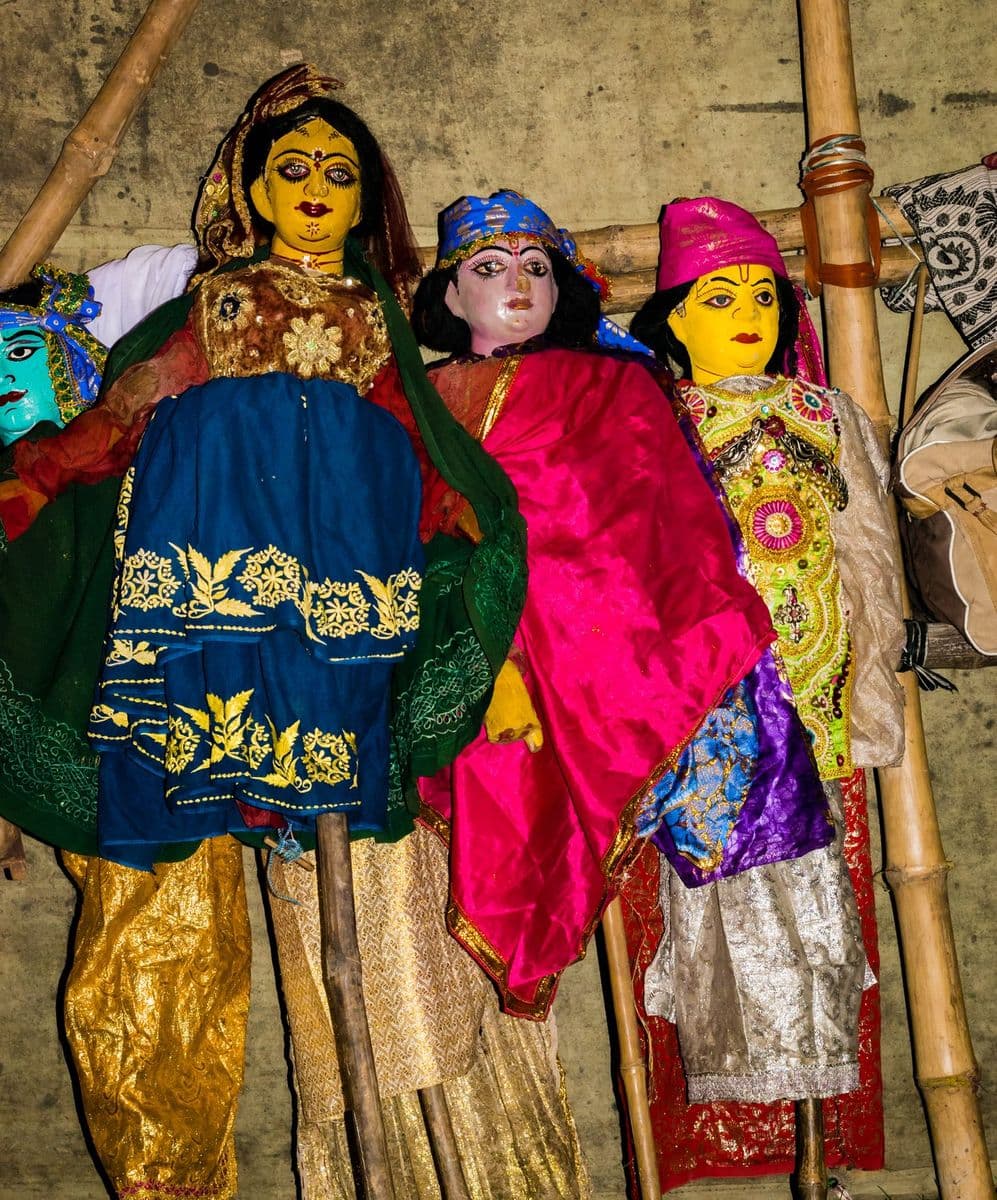
Puppetry sat at the bottom of the performance hierarchy. Where a jatra company could support forty people and an office on Chitpur Road, a putul nach troupe was a family with a cart, and the families came from communities that had nothing else to sell. There was no adhikari system, no licensing, no press and no urban patronage. The season ran with the dry weather, from about Durga Puja through the winter fairs, and ended with the rains.
The work is male at the rod and mixed behind it. Men carry and voice the puppets; the making — the clay-and-husk heads, the stitched costumes, the painting — is a household activity. The troupe doubles as its own orchestra: dholak, harmonium, cymbals, sometimes a flute, played by the same men who are not behind the curtain at that moment.
Its relation to Durga Puja is indirect but real. Putul nach belonged to the mela, and the mela belonged to the festival: the fair that grows around a village puja, the stalls, the jatra booking, the bioscope man, the puppet stage set up on the edge of the ground. When the mela economy thinned, the rod puppet went with it. What remains is Suresh Dutta's line of modern puppet theatre, which is respected, funded and urban, and the last village troupes in South 24 Parganas, which are neither.