The Bengal delta has no building stone. What it has is alluvium, which fires hard, and that constraint produced one of the most distinctive temple architectures in India. Bishnupur, in Bankura, was the capital of Mallabhum, ruled by the Malla dynasty whose foundation is traditionally dated to about 997 CE under Jagat Malla. The dynasty's turn to Vaishnavism under Bir Hambir in the late sixteenth century, and the patronage of his successors Raghunath Singha and Bir Singha, made the town a centre of temple building, music and textiles.
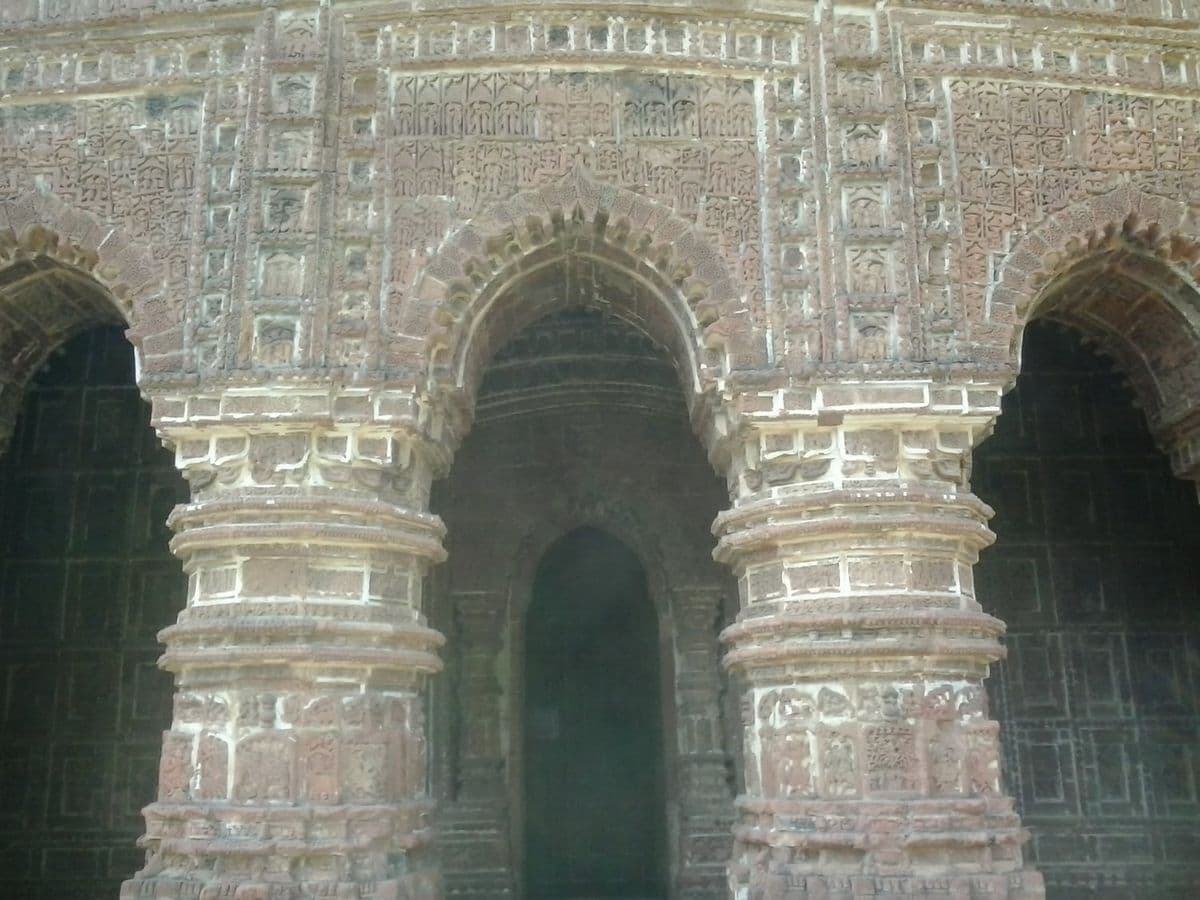
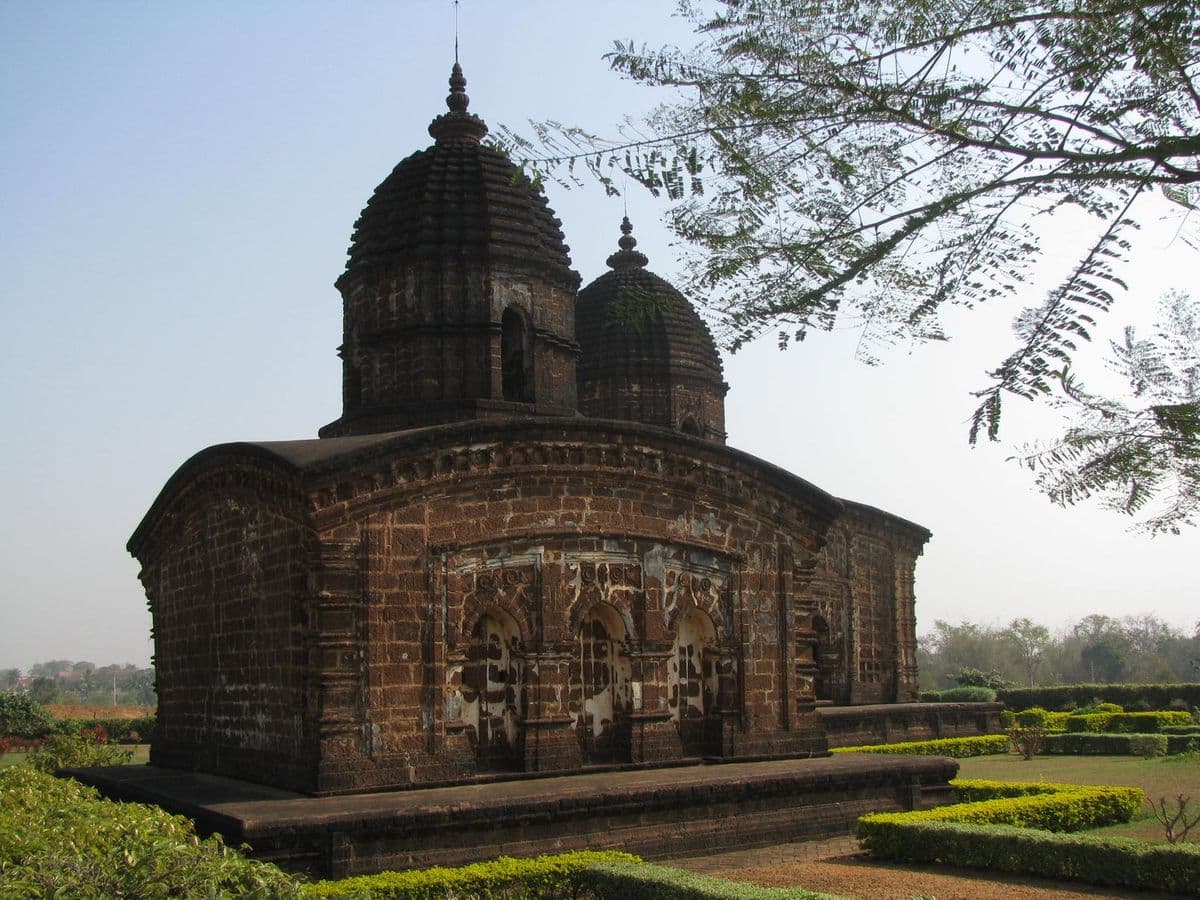
The temples themselves are laterite and brick, faced with moulded and carved terracotta plaques. The Rasmancha is the earliest of the major brick structures; Shyam Rai, the five-towered pancharatna temple, dates to about 1643; the Jor Bangla or Keshta Rai temple to about 1655; Madan Mohan to about 1694. Their plaques run to battle scenes with cannon and cavalry, hunts, boats, the Ramayana and the Mahabharata, Krishna among the cowherds, and daily life. This is narrative architecture: the wall is the manuscript. The temples of Bishnupur have been on UNESCO's tentative World Heritage list since 1997.
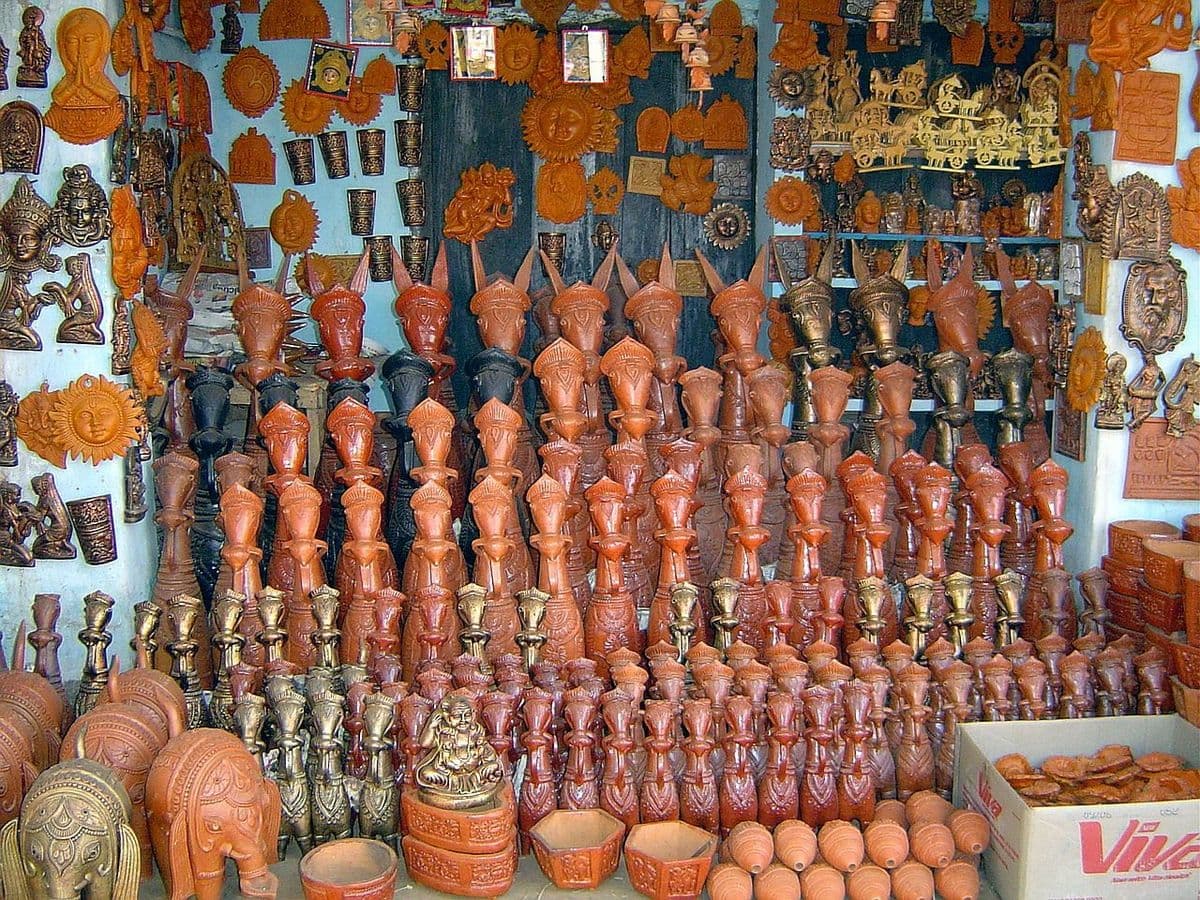
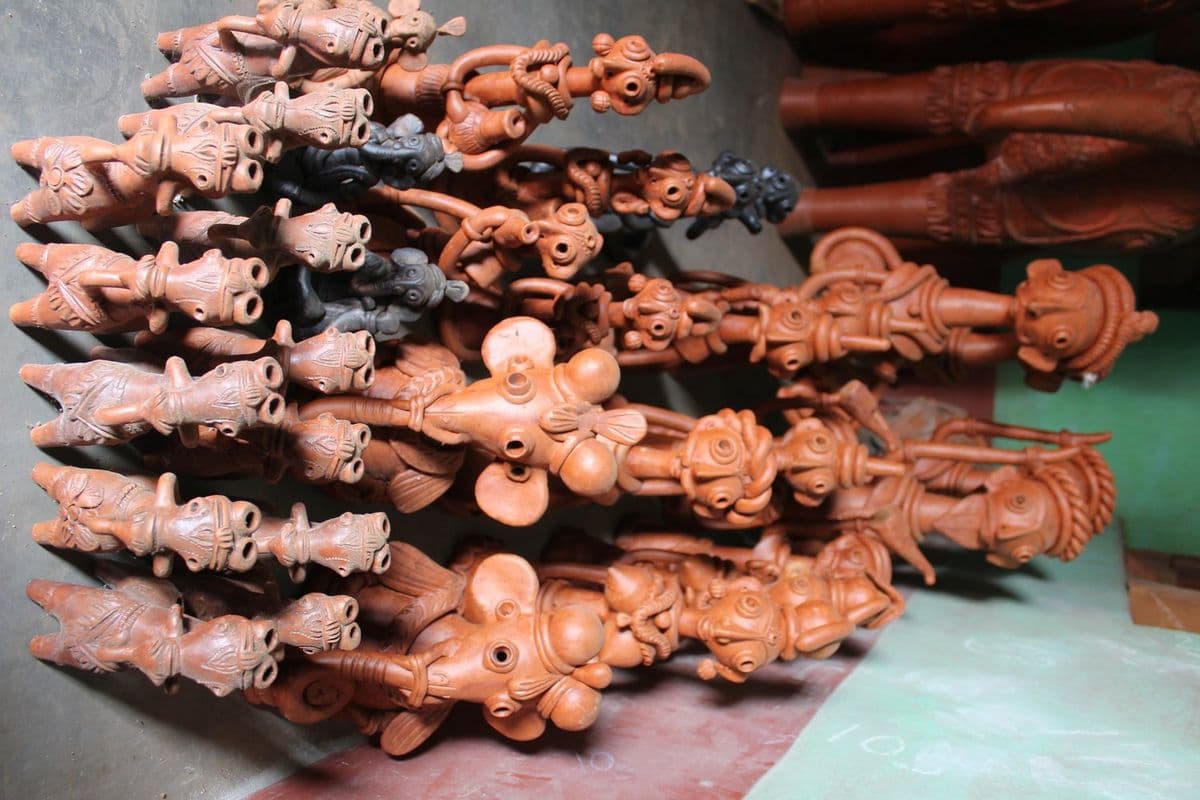
Twenty-one kilometres away at Panchmura, hereditary potters make the Bankura horse — long-necked, ears pricked, radically abstracted. It is a votive object before it is an ornament: in the Rarh country, terracotta horses and elephants are massed under trees at shrines of Dharmathakur and Manasa as offerings, standing in for the animal that once would have been given. Four villages are recognised as centres — Panchmura, Rajagram, Sonamukhi and Hamirpur — and Panchmura's work is usually judged the finest. The figure entered national iconography in the 1950s: it appeared on an Indian postage stamp in 1957 and was adopted as the crest of the All India Handicrafts Board, which is why it is now shorthand for Indian craft as such. The popular claim that the form is unchanged since antiquity is not supportable; what is old is the votive practice, not this particular silhouette, which was refined for a twentieth-century market. On 28 March 2018 the craft was registered as a geographical indication under the name Bankura Panchmura Terracotta Craft.