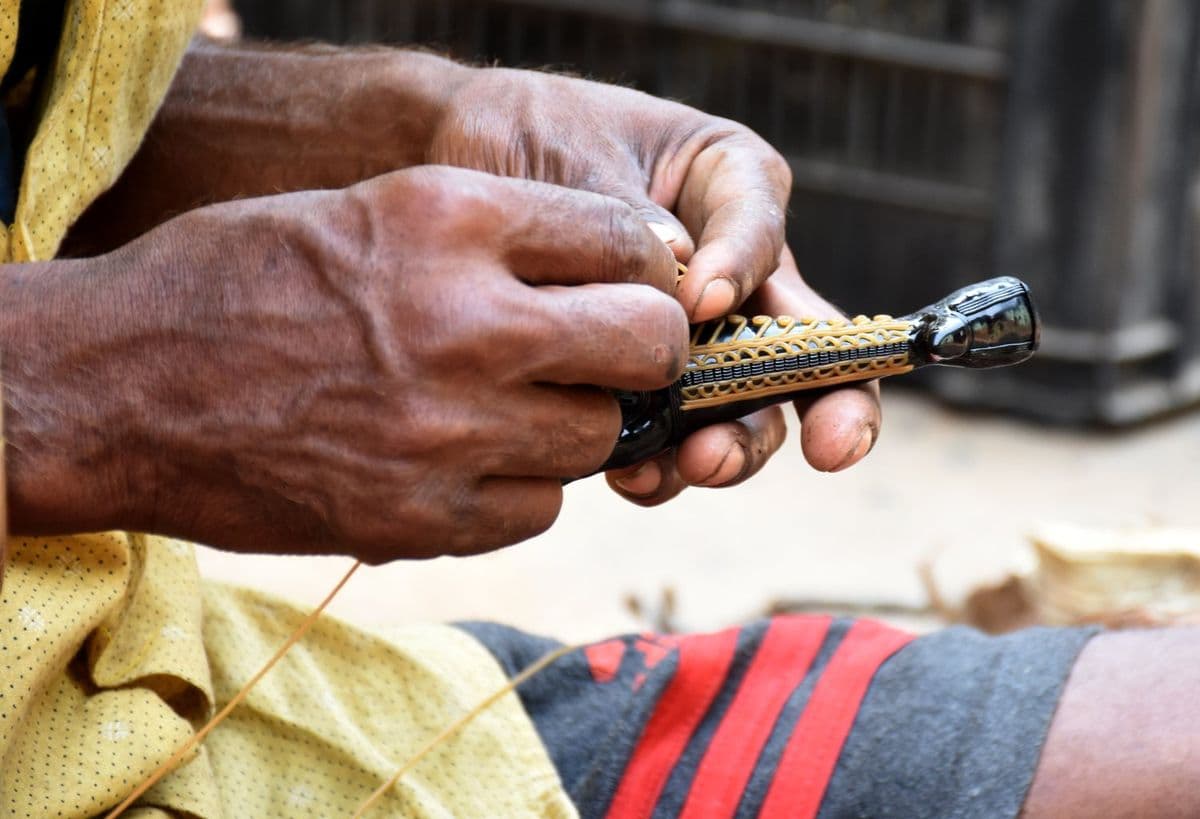
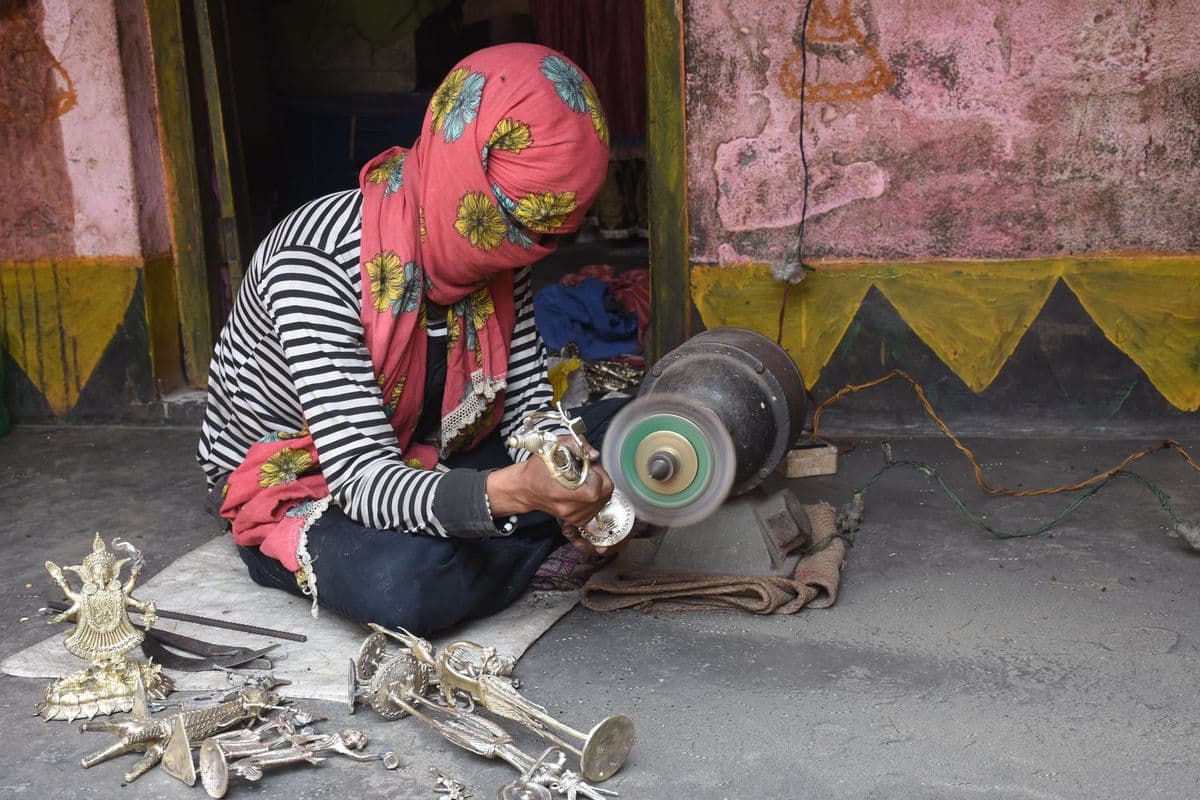
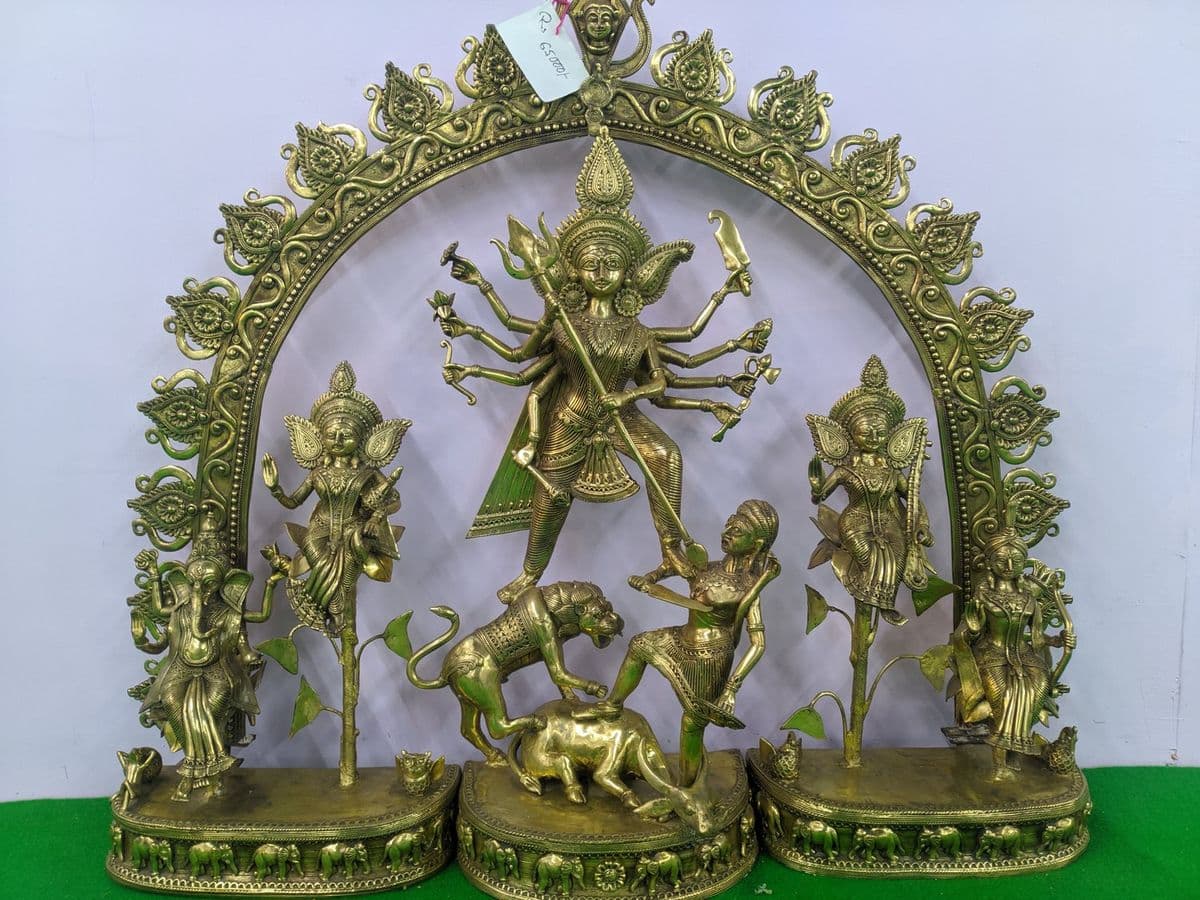
Dokra is hollow lost-wax casting in bell metal or brass, and the technique is genuinely ancient: the dancing girl of Mohenjo-daro, cast some four and a half thousand years ago, is made the same way. That continuity is often stated too loosely. What survives in eastern India is a living craft practised by particular communities, not an unbroken descent from the Indus workshops, and the two claims are usually run together in the publicity.
The name is also unsettled. The standard account says the craft is named for the Dhokra Damar, a formerly itinerant metalsmith community spread across West Bengal, Jharkhand and Odisha who travelled as far south as Tamil Nadu and as far north as Rajasthan. Fieldwork complicates this. When the archaeologist Lee Horne studied the Dariapur casters in Burdwan district in 1987–88 for the University Museum in Philadelphia, she found that the fifteen or so closely related families of the Dariapur Artisans Cooperative called themselves Malhar, spoke their own language rather than Bengali, carried the occupational surname Karmakar, and traced their route from the tribal country of Chota Nagpur through Odisha into Bengal, settling permanently only in the early 1960s. Local accounts in Dariapur put the migration from Odisha at about 120 years ago, with some fifteen or sixteen families there around 1952.
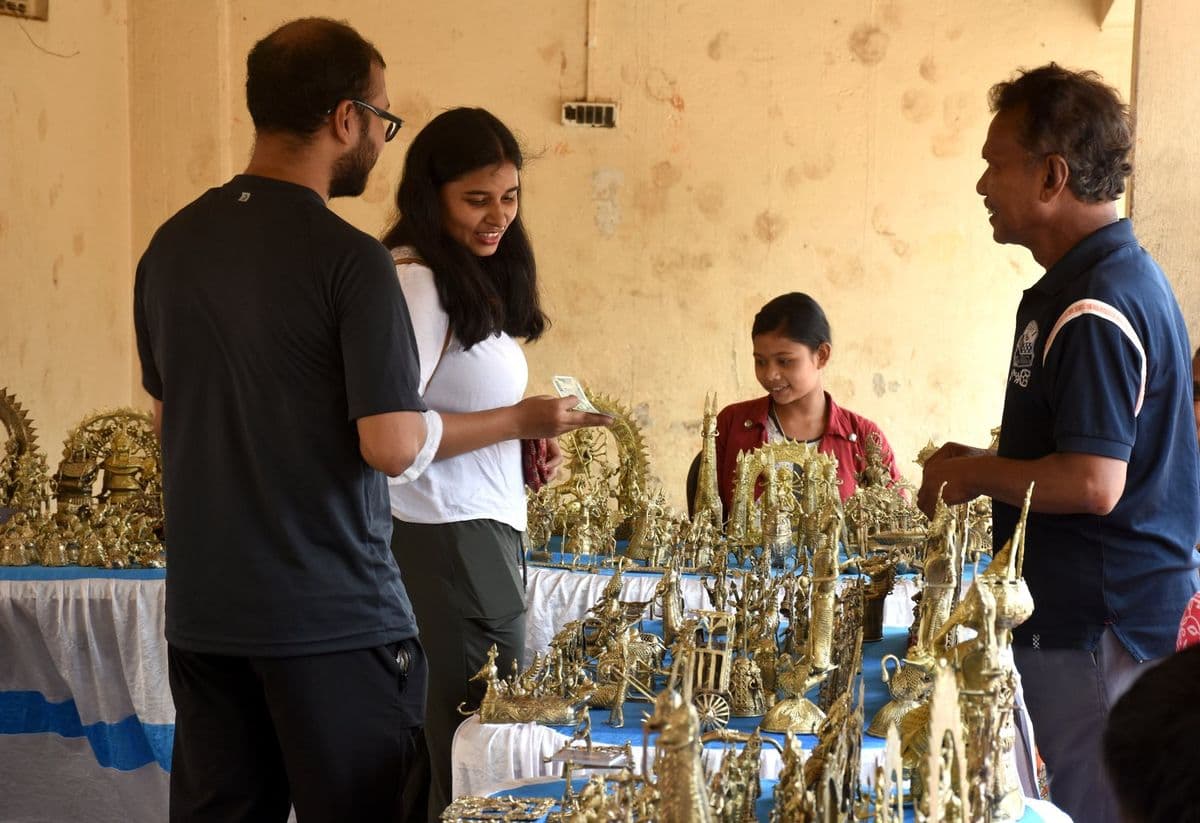
The two working centres in West Bengal are Dariapur, in what is now Purba Bardhaman, and Bikna, outside Bankura town; Chhattisgarh's Bastar, Jharkhand and Telangana have their own traditions. What the casters originally made was not sculpture for collectors but usable and ritual objects: measuring bowls for rice, oil lamps, pancha pradeep, dhunuchi, fish containers, anklets for Santhal customers, and images of tribal and Hindu deities. National recognition came to individuals — Sambhunath Karmakar took a national award in 1966, and Ramu Chitrakar in 2012. Dokra of West Bengal was registered as a geographical indication in 2018, the same year as Adilabad Dokra of Telangana; Bastar Dhokra had been registered in 2014.