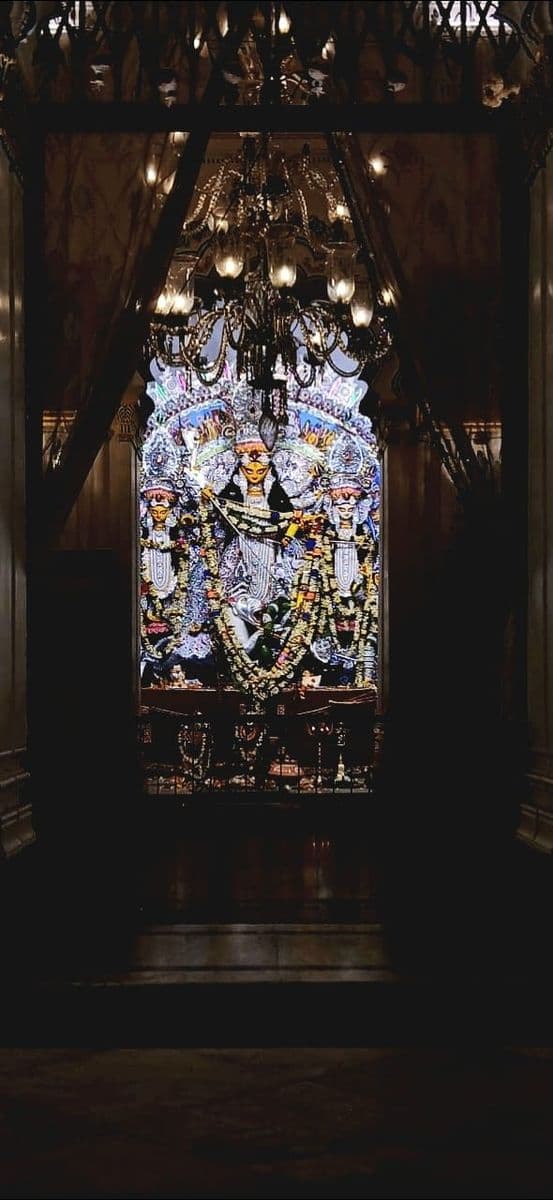
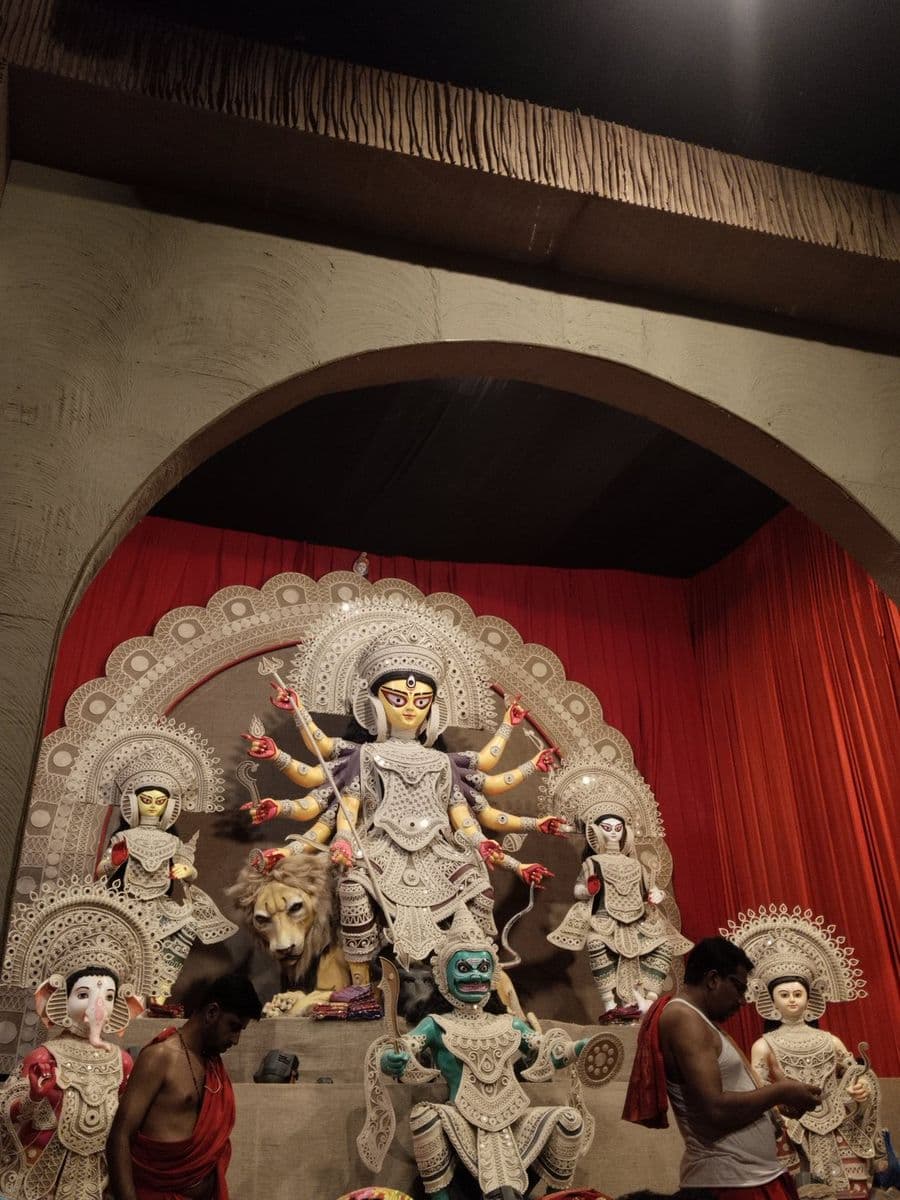
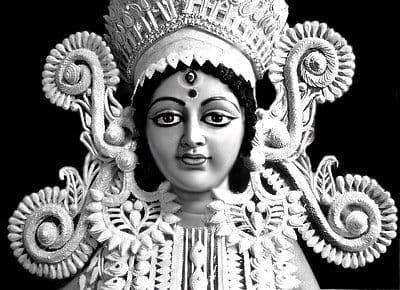
The base is cut from shola pith or from stiff paper and card. Over it go sheets of rangta (রাংতা) — tin or silver foil — and coloured foil, which are cut to shape, embossed from the back with a blunt stylus so the design stands up in relief, then crimped, folded and pasted down. The stylus work is what makes daker saj look like beaten metalwork rather than like foil.
The pieces built this way are the mukut (মুকুট, crown), the arched halo behind the head, the buker paat or breastplate, arm-bands and anklets, the weapons, the caparison for the lion, and the chandmala (চাঁদমালা), the garland of linked discs hung behind the group. Adhesive is traditionally tamarind-seed or bel-fruit gum; modern workshops use synthetic glue. Sequins, glass beads and zari braid are added last.
Nothing is moulded and nothing is machine-formed in the older method — every element is cut freehand with scissors and a knife and shaped against the thumb. The cheaper contemporary version substitutes thermocol for shola and stamped metallic sheet for hand-embossed foil, which is faster and reads from a distance but has no relief.
- ডাকdak
- Post, mail — the word that names the whole style, because the foil arrived by post from Germany.
- রাংতাrangta
- Tin or silver foil, the sheet material that is cut and embossed to make the ornament.
- মুকুটmukut
- The crown, the largest and most elaborate single piece of the saj.
- চাঁদমালাchandmala
- The "moon-garland" of linked discs hung behind the deity, read variously as lunar phases or as demon heads.
- সাবেকিsabeki
- Traditional, old-style — now a marketed category of puja, defined largely by the presence of daker saj and a painted chalchitra.
- ঠাকুরদালানthakurdalan
- The pillared, open-fronted worship hall of an aristocratic Bengali house, the lighting condition daker saj was designed for.
- সাজপাড়াsaj-para
- The decorators' quarter within Kumartuli, a separate trade from the idol-makers.