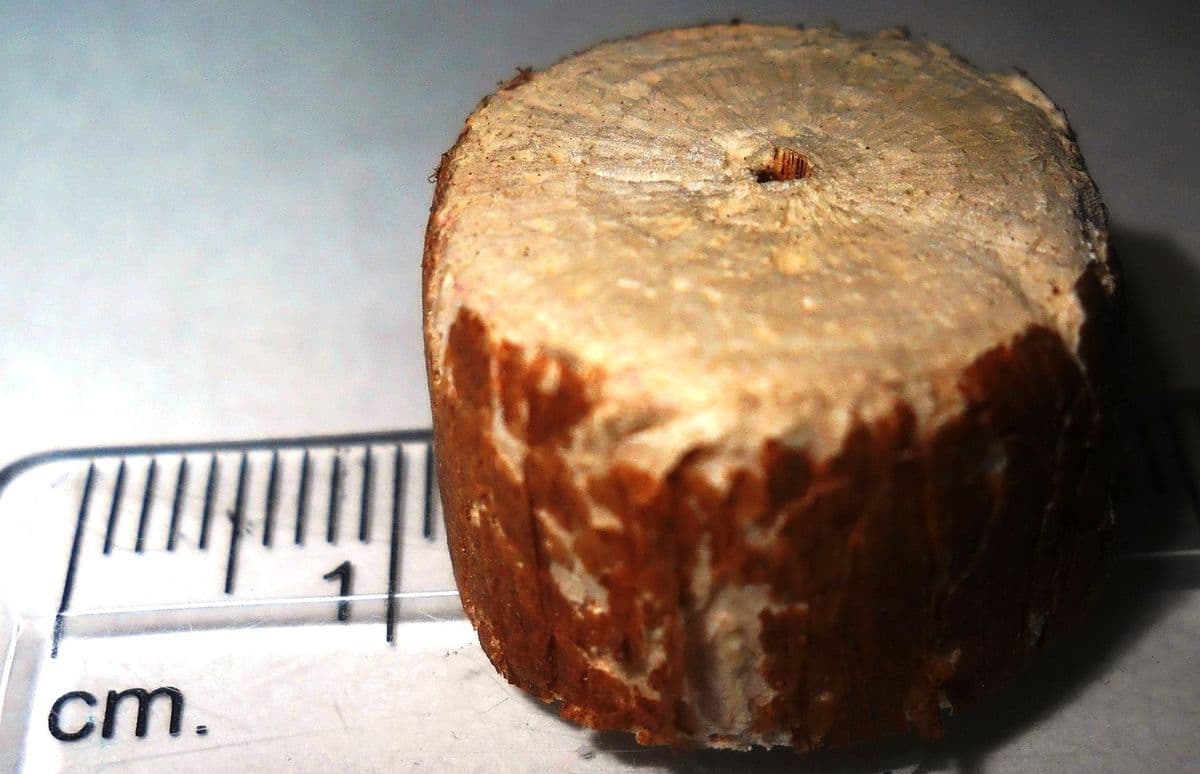
Stems are cut in the monsoon when the plant is standing in water, bundled and dried. The craftsman strips the thin reddish bark and works the white core with a single tool: the kath (কাঠ) or shola knife, a short curved blade ground by the maker himself and used at a shallow angle. There are no moulds, no lathes and no templates. Ribbons are pared off the stem in continuous shavings, sometimes thinner than paper, then curled against the blade or the thumb, layered and pasted.
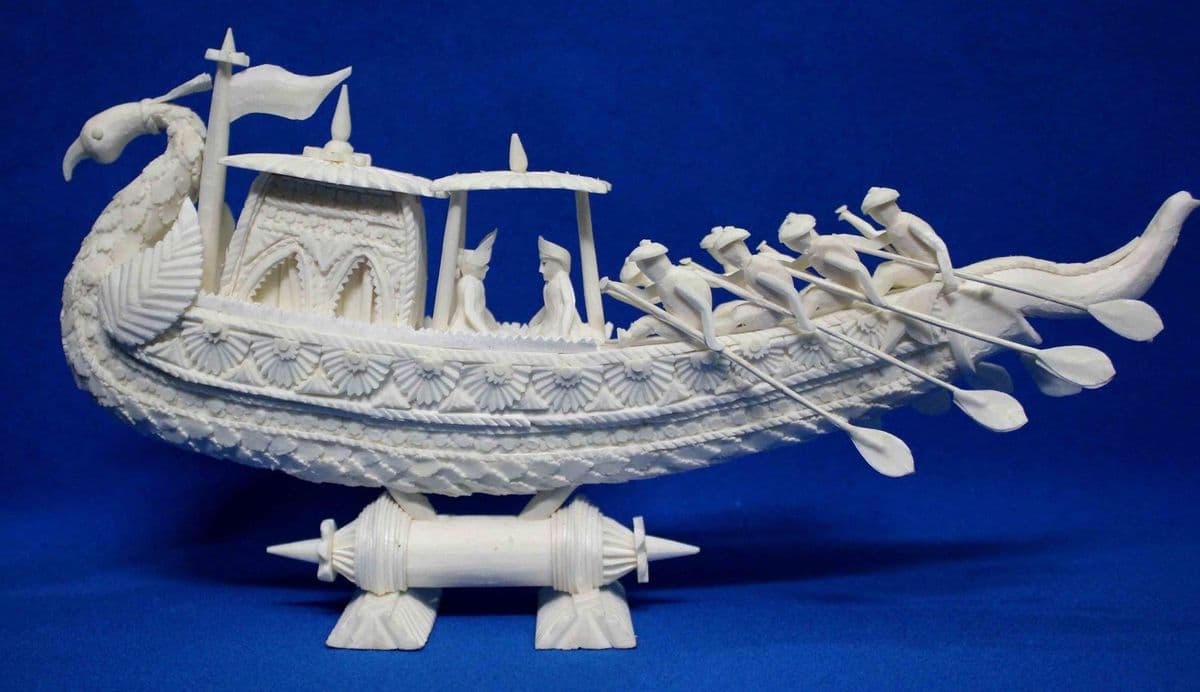
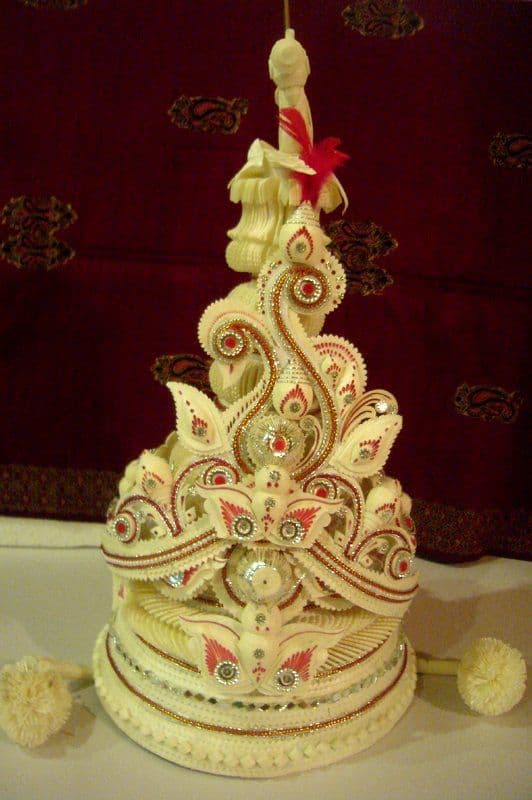
The adhesive is traditionally tentul bichir aatha (তেঁতুল বিচির আঠা), tamarind-seed gum, sometimes bel-fruit gum. Assembly builds up the mukut (মুকুট, crown), the arched prabhamandal or halo, the chandmala (চাঁদমালা), the armour and jewellery of the whole Durga group, and outside the festival the bridal topor (টোপর) and mukut, decorative flowers, peacock boats, elephant howdahs and palanquins.
Colour is added sparingly — red and gold foil, glass, mica — because the point of the material is that it is already white. Everything is cut freehand, and a large crown may take a week.
- শোলাshola
- The white spongewood stem of Aeschynomene aspera, a marsh plant; botanically wood, not pith, and among the lightest in the world.
- মালাকারMalakar
- The hereditary garland-maker caste who work shola, one of the nine Nabasakha artisan groups.
- টোপরtopor
- The conical white shola headgear worn by a Bengali Hindu groom; the bride's equivalent is the mukut.
- চাঁদমালাchandmala
- The garland of linked discs hung behind the deity, one of the standard shola pieces.
- শোলার সাজsholar saj
- The whole set of shola ornament for the Durga group — crown, halo, armour, jewellery and lion's caparison.
- তেঁতুল বিচির আঠাtentul bichir aatha
- Tamarind-seed gum, the traditional adhesive for assembling shola work.
- প্রভামণ্ডলprabhamandal
- The arched halo or aureole behind the deity's head, built up in layered shola ribbon.