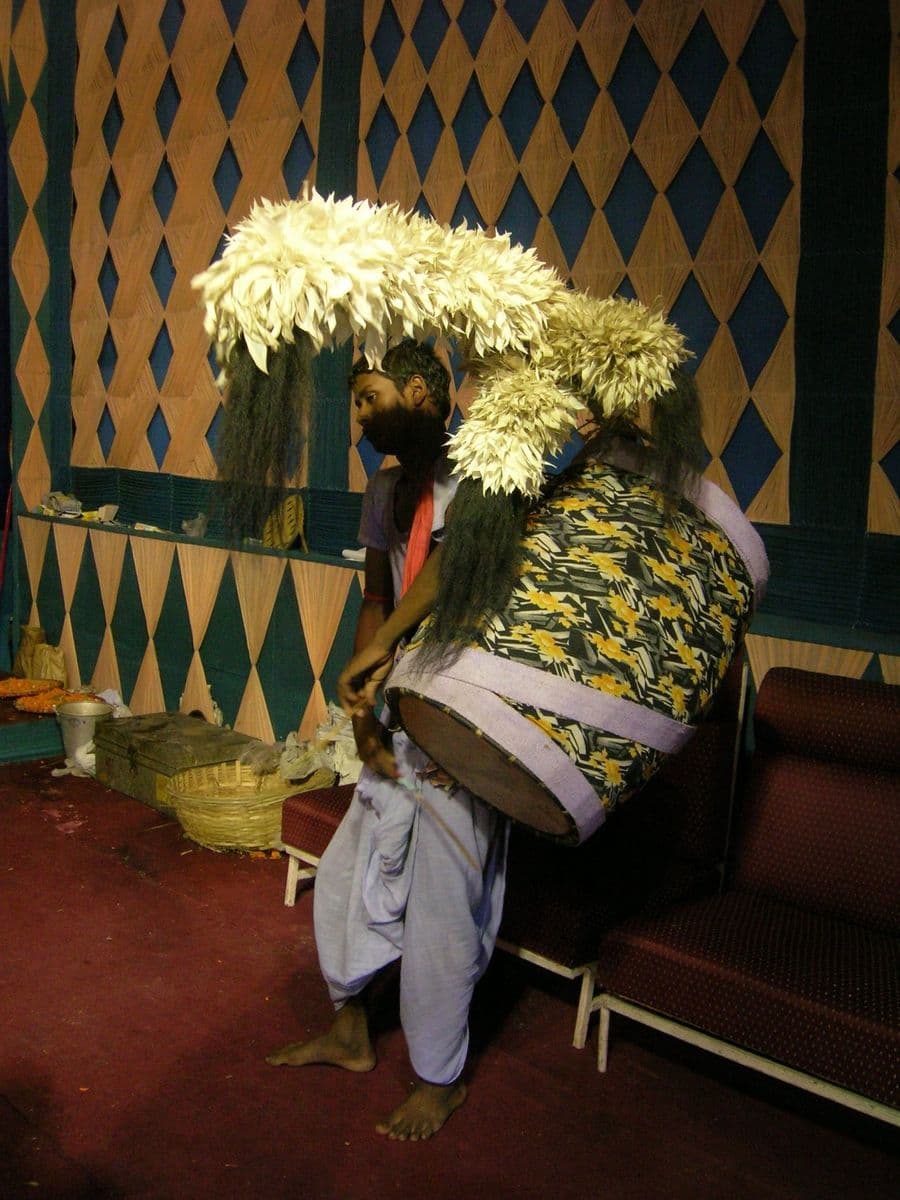
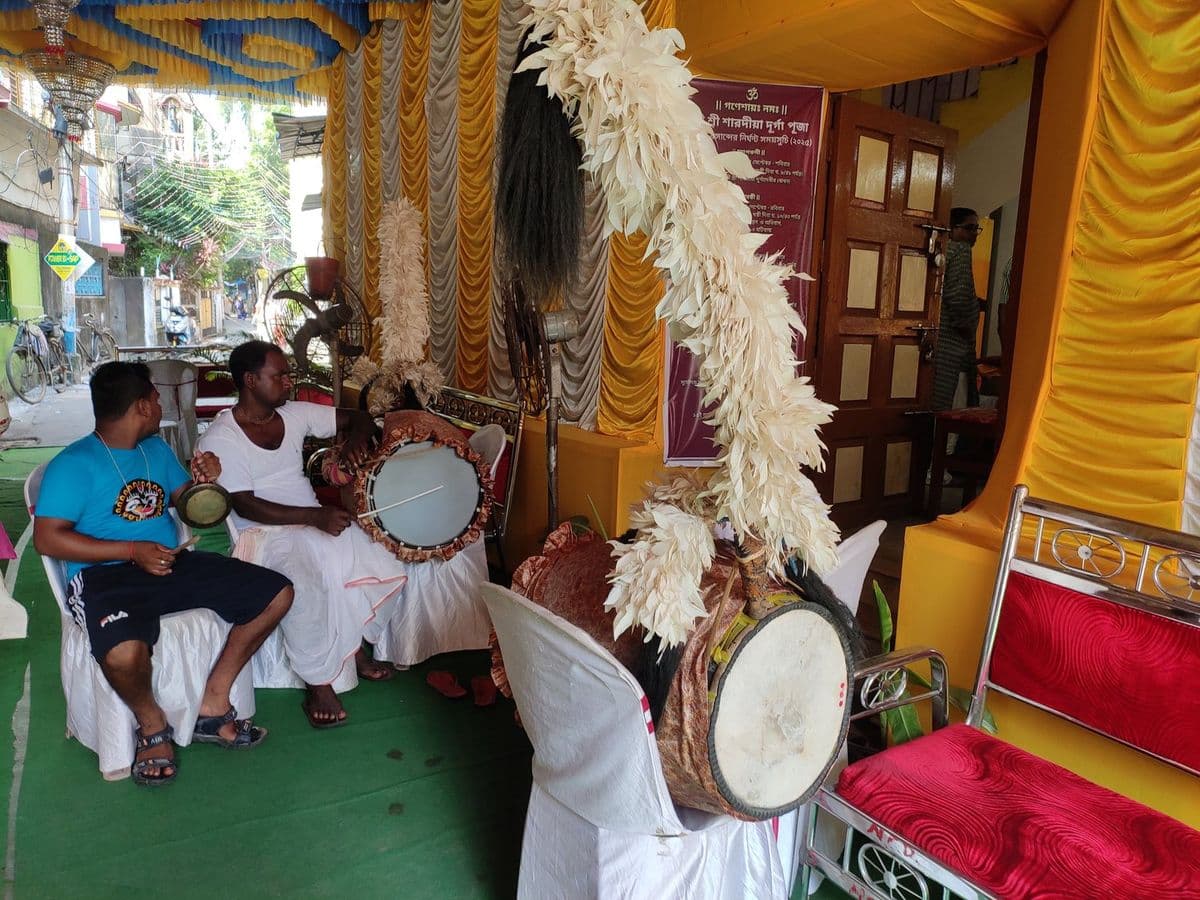
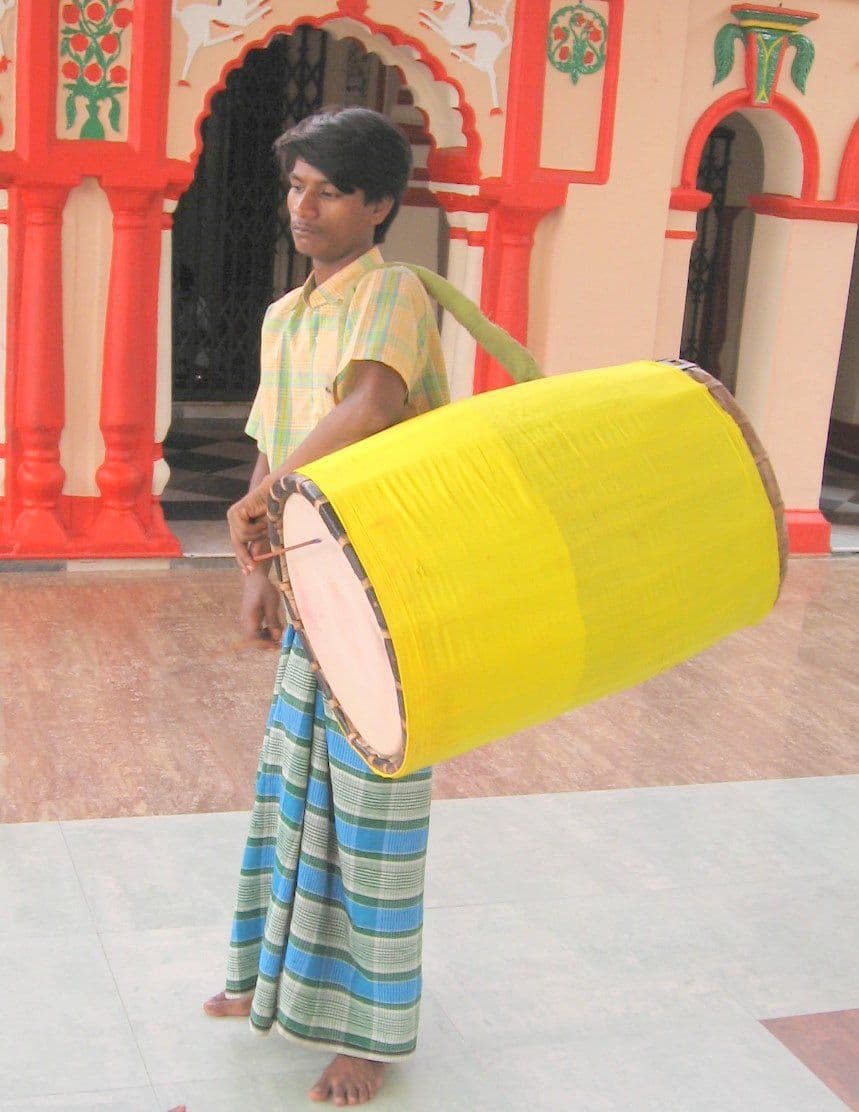
Dhakis come mostly from Bardhaman, Murshidabad, Birbhum, Nadia, Bankura, Malda, Hooghly, Purulia, Medinipur and the 24 Parganas, and a large proportion belong to marginalised communities. The village of Koikirtan alone has over a hundred dhakis, most of them from the Rishi community, near the bottom of the caste hierarchy. For eleven months they farm, labour or pull rickshaws. For four or five days they are indispensable to a festival that could not begin without them.
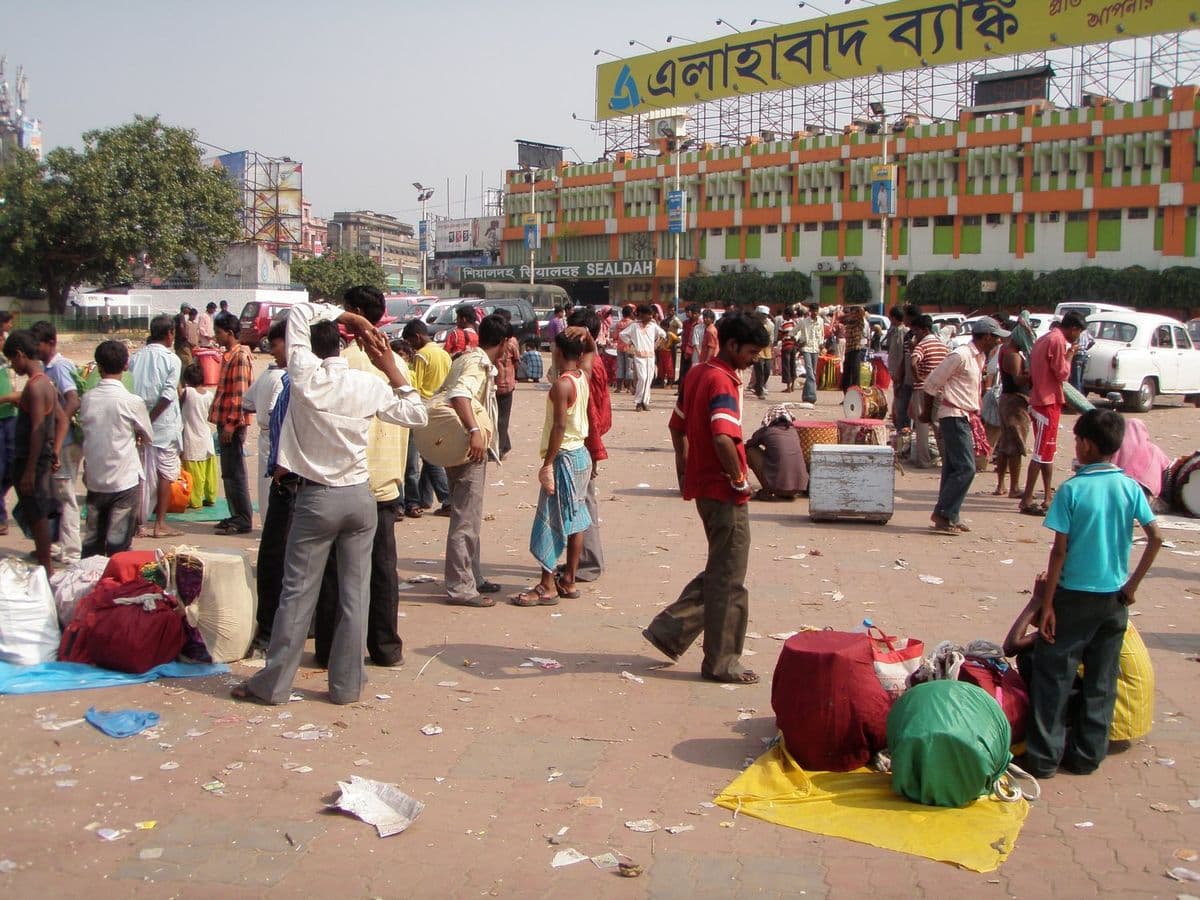
The hiring is done on the platform. In the days before Puja, dhakis converge on Sealdah and Howrah stations with drums, bedding and cooking pots, and committee representatives walk the crowd, listen, negotiate and take them away. Photographs of the Sealdah dhaki bazaar — men squatting beside bundled drums under an Allahabad Bank hoarding — are among the most honest images the festival produces.
Gender was absolute until 2010. The dhak was held to be too heavy and the work too itinerant for women, and no woman played one professionally. Gokul Chandra Das broke that deliberately, training a mixed troupe and then, over fifteen years, more than 150 women as professional dhakis; he became the first dhaki ever awarded the Padma Shri, in 2025. Women dhakis are now a visible, if small, part of the Kolkata circuit and are paid the same rates.
Transmission remains familial. A boy learns the patterns by ear, standing next to his father.