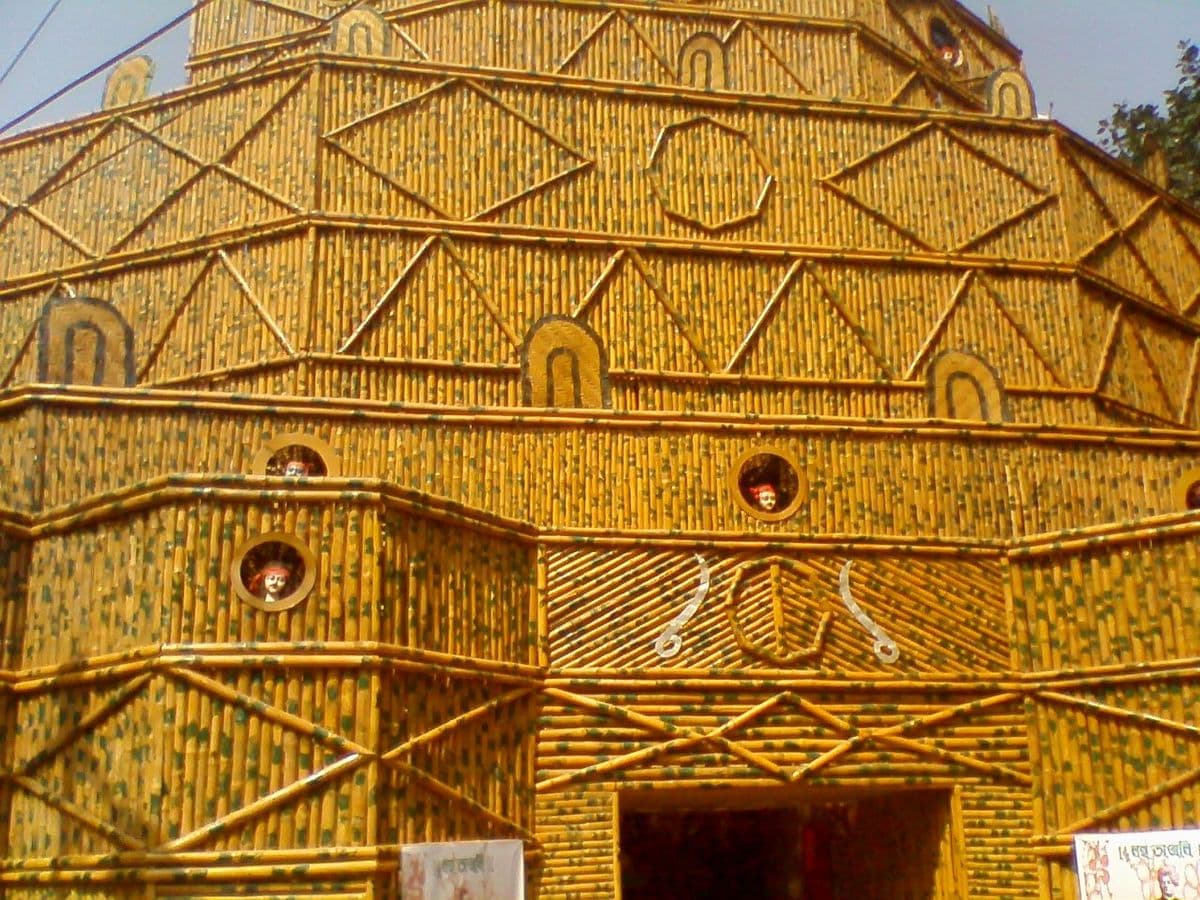
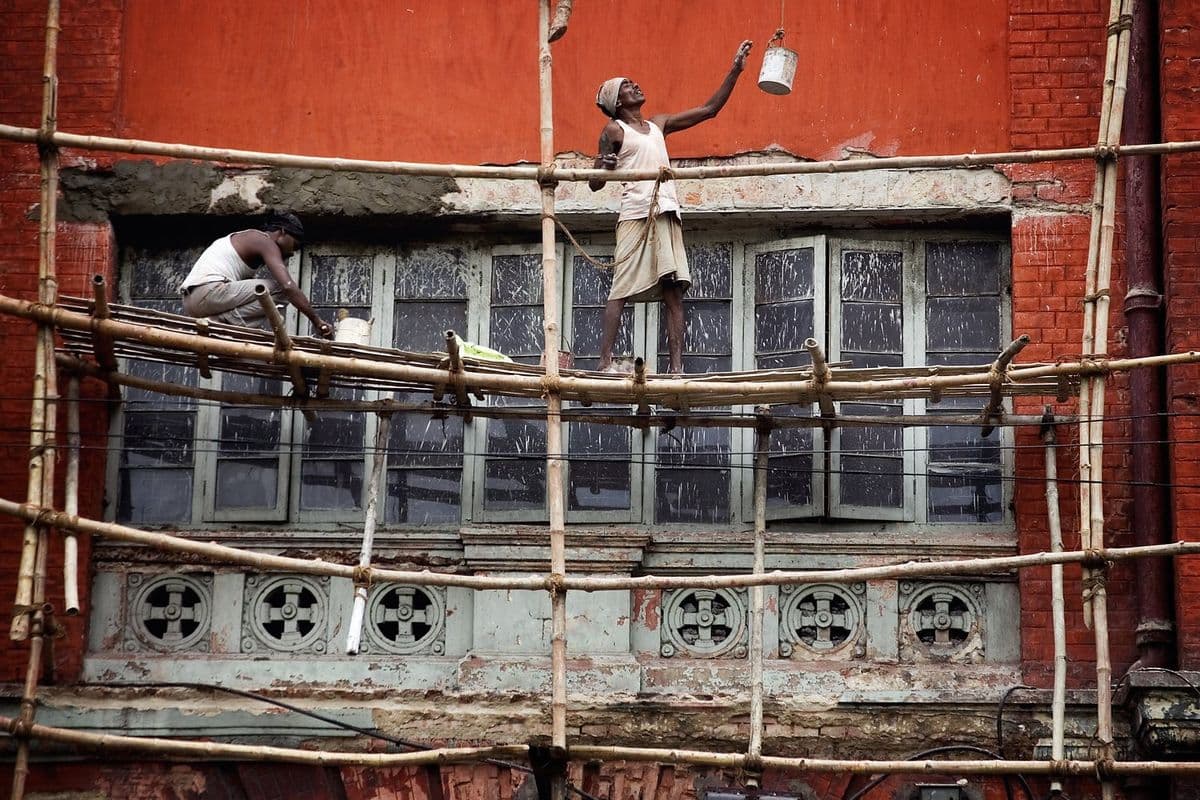
The primary structure is bansh — usually the thick-walled species locally called borak or bhima — cut to length and lashed at every intersection with coir or jute rope. There are no fixings. The joint is made by wrapping the rope repeatedly around both members and then frapping it, turns pulled across the wrapping to tighten it, exactly as in a scaffold lashing. A lashed joint is semi-rigid: it takes bending by deforming slightly and returning, which is why a hundred-foot bamboo tower rides out a storm.
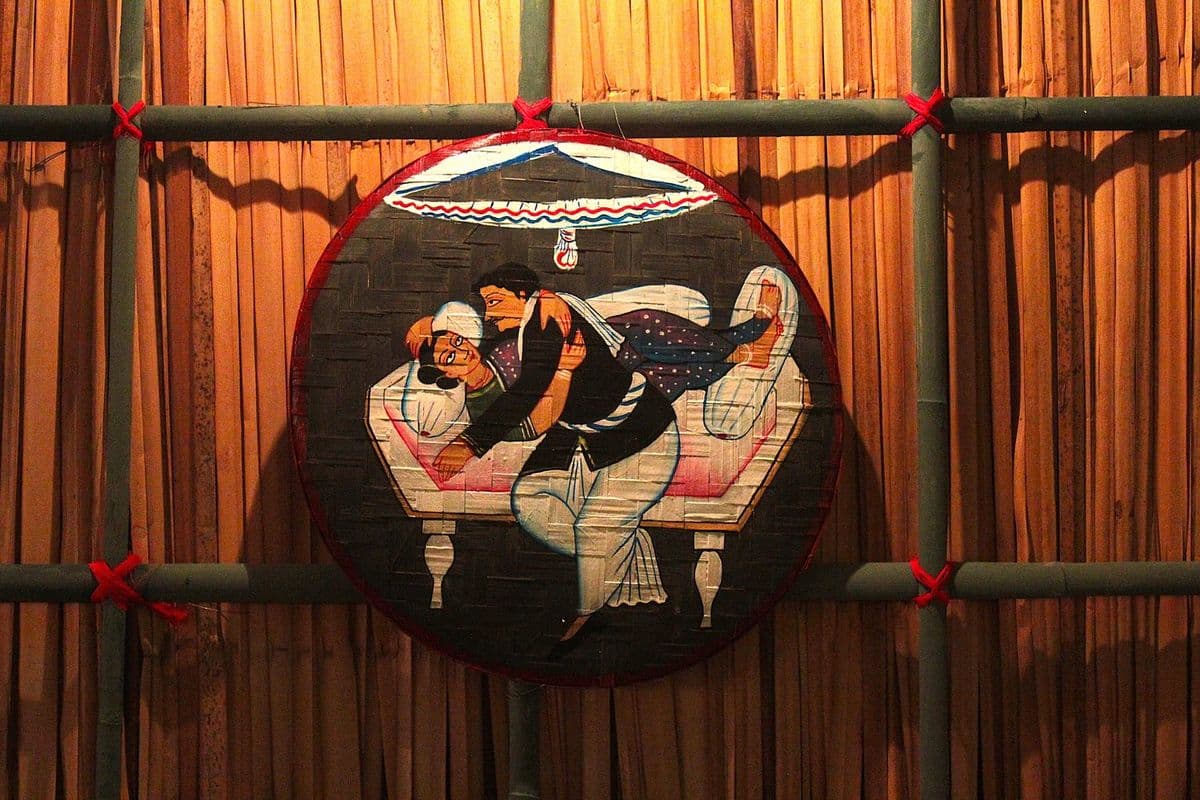
Work on the primary kathamo (কাঠামো) typically begins in August, six to eight weeks out. Verticals go up first and are cross-braced with diagonals; a working platform is tied at each level as the frame rises, and the men climb the structure they are building. Cladding is then hung on the frame: cloth, plywood, tin, thermocol, jute, cane matting, terracotta panels, split bamboo screen, palm leaf, sholapith, or whatever the theme requires. The decorative surface carries no load.
Lighting rigs, sound and the idol platform are tied into the same frame. Dismantling takes days, not weeks, and the bamboo is recovered.
- প্যান্ডেলpandal
- The temporary pavilion housing the goddess; a full building erected and dismantled within weeks.
- বাঁশbansh
- Bamboo — the sole structural material of the primary frame.
- কাঠামোkathamo
- Frame or skeleton — used both for the idol's armature and for the pandal's bamboo structure.
- খুঁটি পুজোkhuti puja
- The consecration of the first post to Vishwakarma, which begins construction months before the festival.
- বাঁধাইbandhai
- The tying of the lashed joints, and the man who does it — the load-bearing skill of the whole trade.
- মণ্ডপmandap
- The ritual pavilion proper, the older word for the space where the deity is installed.
- সর্বজনীনsarbojanin
- "For all" — the open community puja, the social form that made the pandal necessary.
- থিমের পুজোthemer pujo
- The theme puja, in which pandal, idol, light and sound are designed by one artist as a single installation.