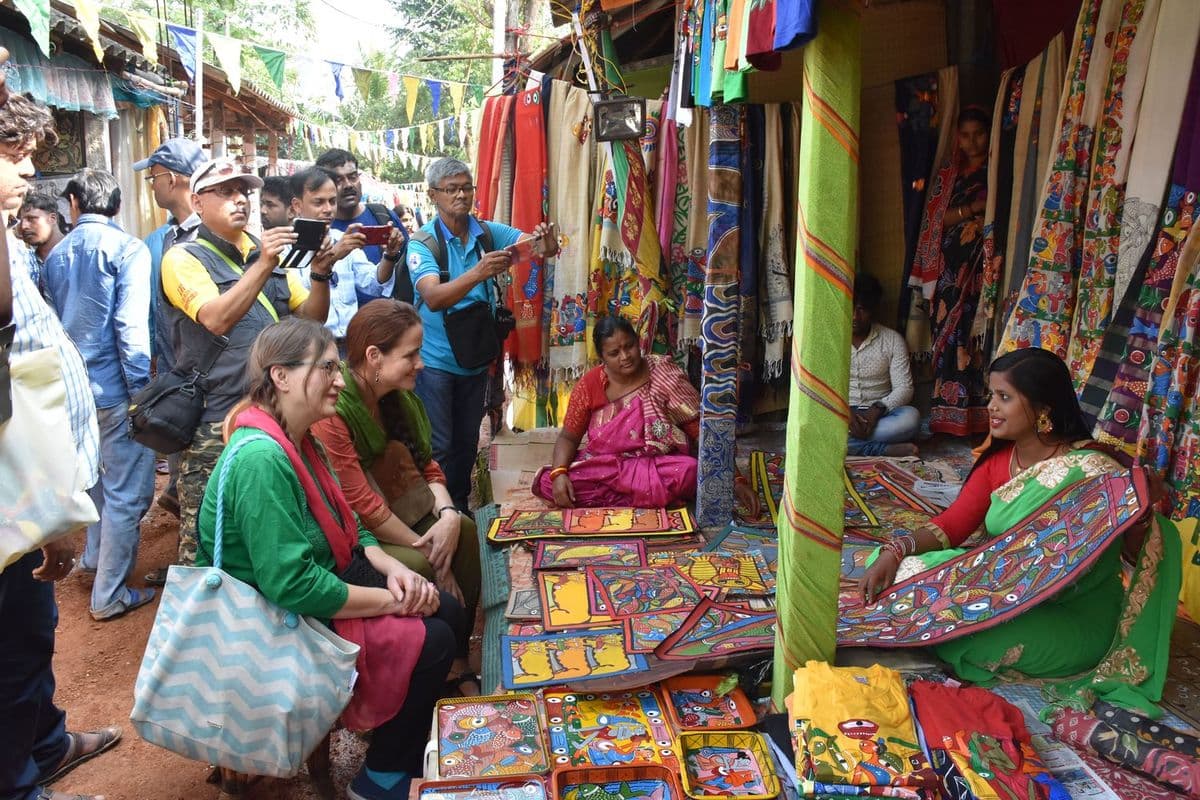
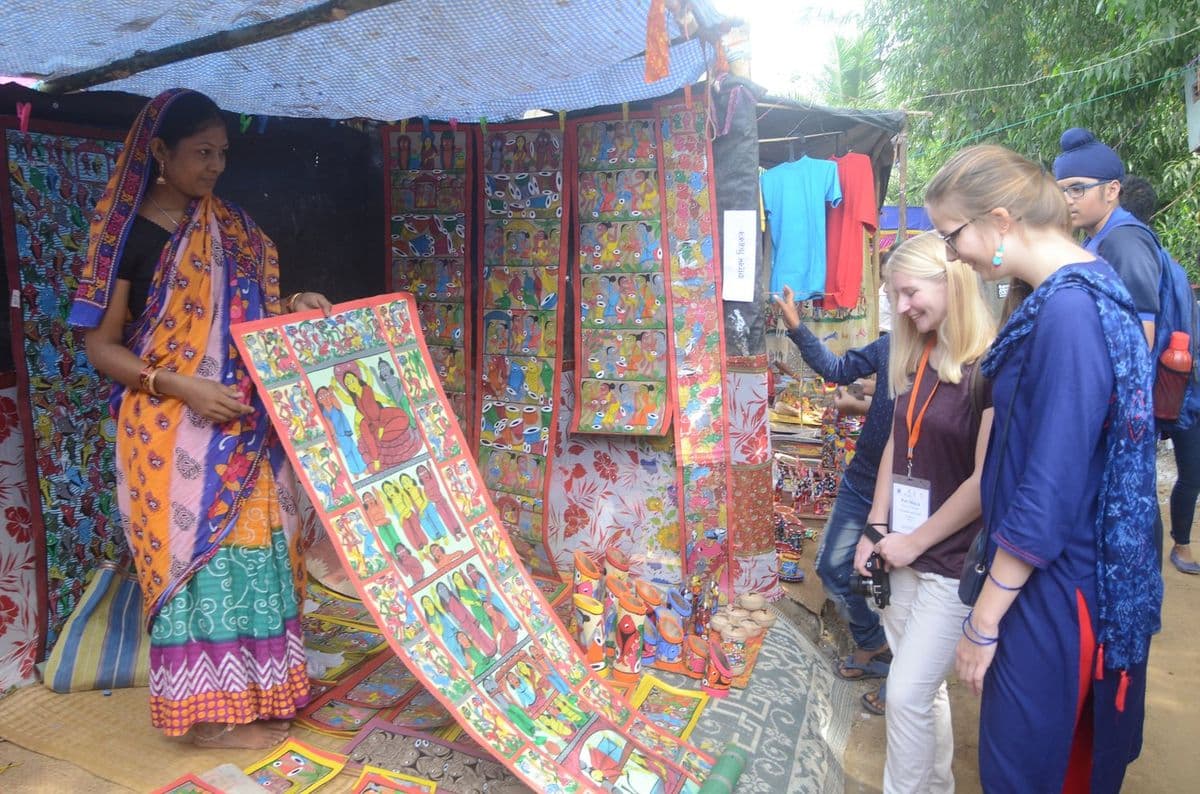
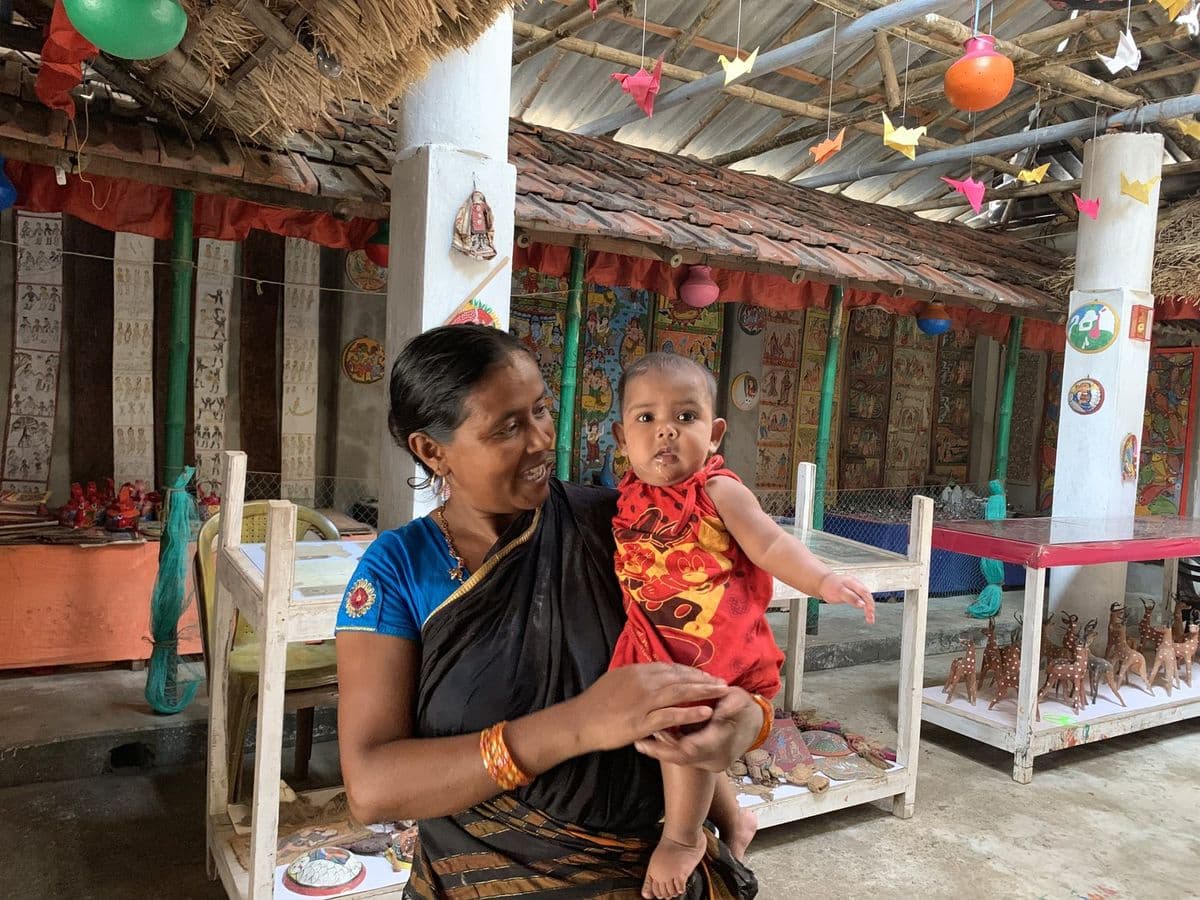
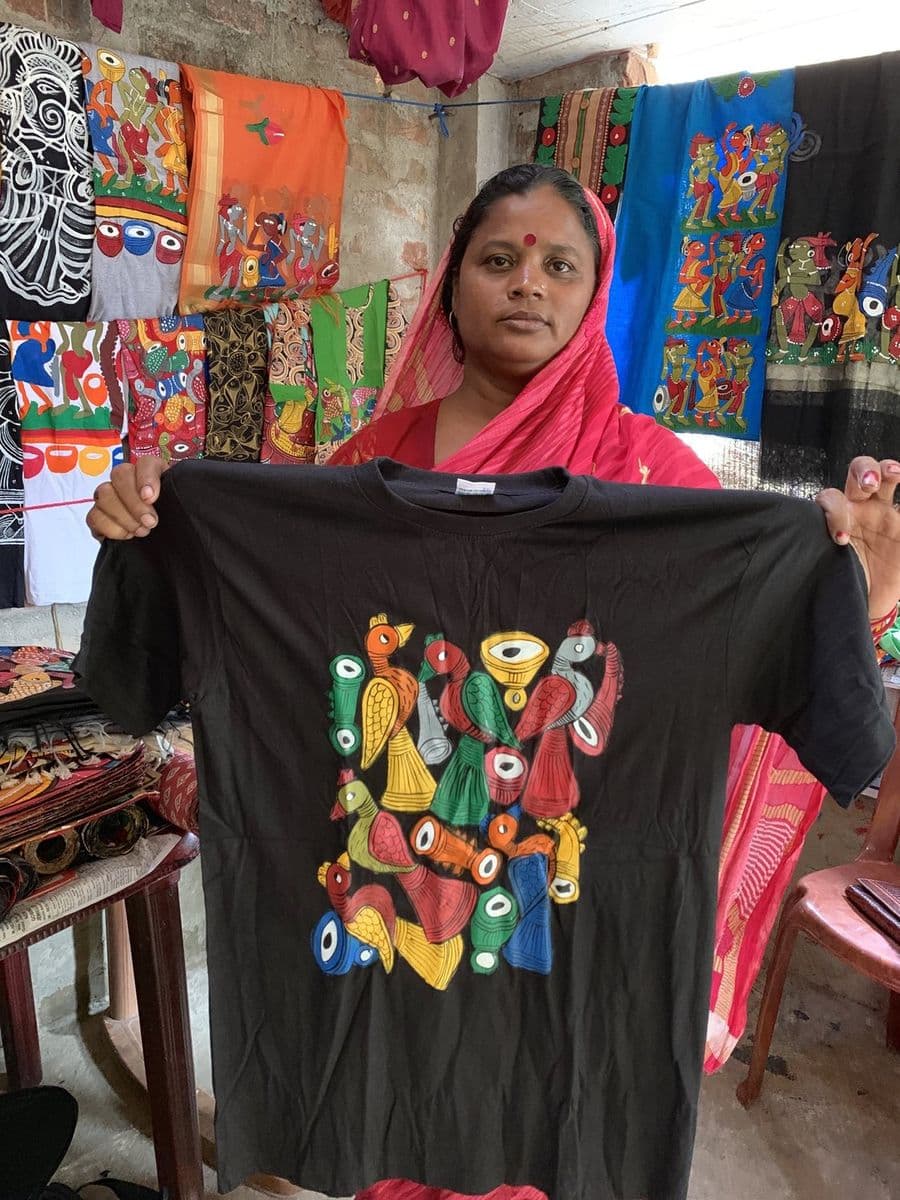
Pata (পট) is cloth or scroll; chitra (চিত্র) is picture. Bengal's Patua or Chitrakar community has painted narrative scrolls since at least the thirteenth century, and probably earlier — the form is referred to in medieval Bengali literature and the mangal-kavya poems assume an audience already familiar with it. The living heartland is Naya, a village in Pingla block of Paschim Medinipur, with surviving clusters in Birbhum, Bankura, Purulia and Murshidabad.
What distinguishes Bengal's pata from Odisha's is that it moves and it sings. A jorano pat (জড়ানো পট) is a vertical scroll of paper panels pasted end to end and backed with old sari cloth, sometimes twenty feet long, painted in sequential frames. The patua unrolls it frame by frame and sings the pater gaan (পটের গান) — a narrative song that the same person has composed. Painter, lyricist and singer are one. It is, functionally, pre-cinema, and the patua carries the projector on his back.
In the nineteenth century a branch of the community migrated to the bazaar around the Kalighat temple in Calcutta and adapted the craft for a pilgrim market: single sheets, mill paper, cheap watercolour, sold fast. That offshoot became Kalighat pat, fed into Jamini Roy's modernism and from there into twentieth-century Indian art.
The scroll tradition itself nearly died in the twentieth century and did not. Bengal Patachitra was registered as a Geographical Indication on 28 March 2018, and Naya is now one of the few Indian craft villages with a rising, not falling, number of practitioners.