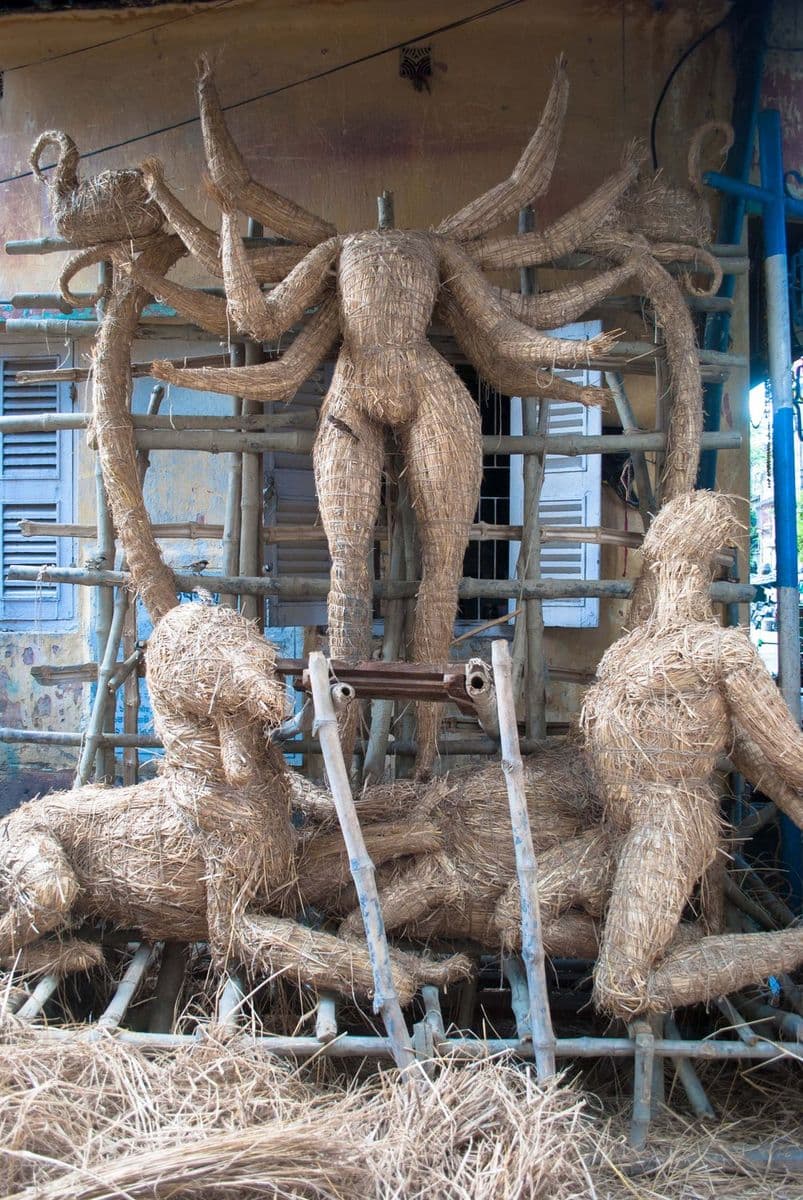
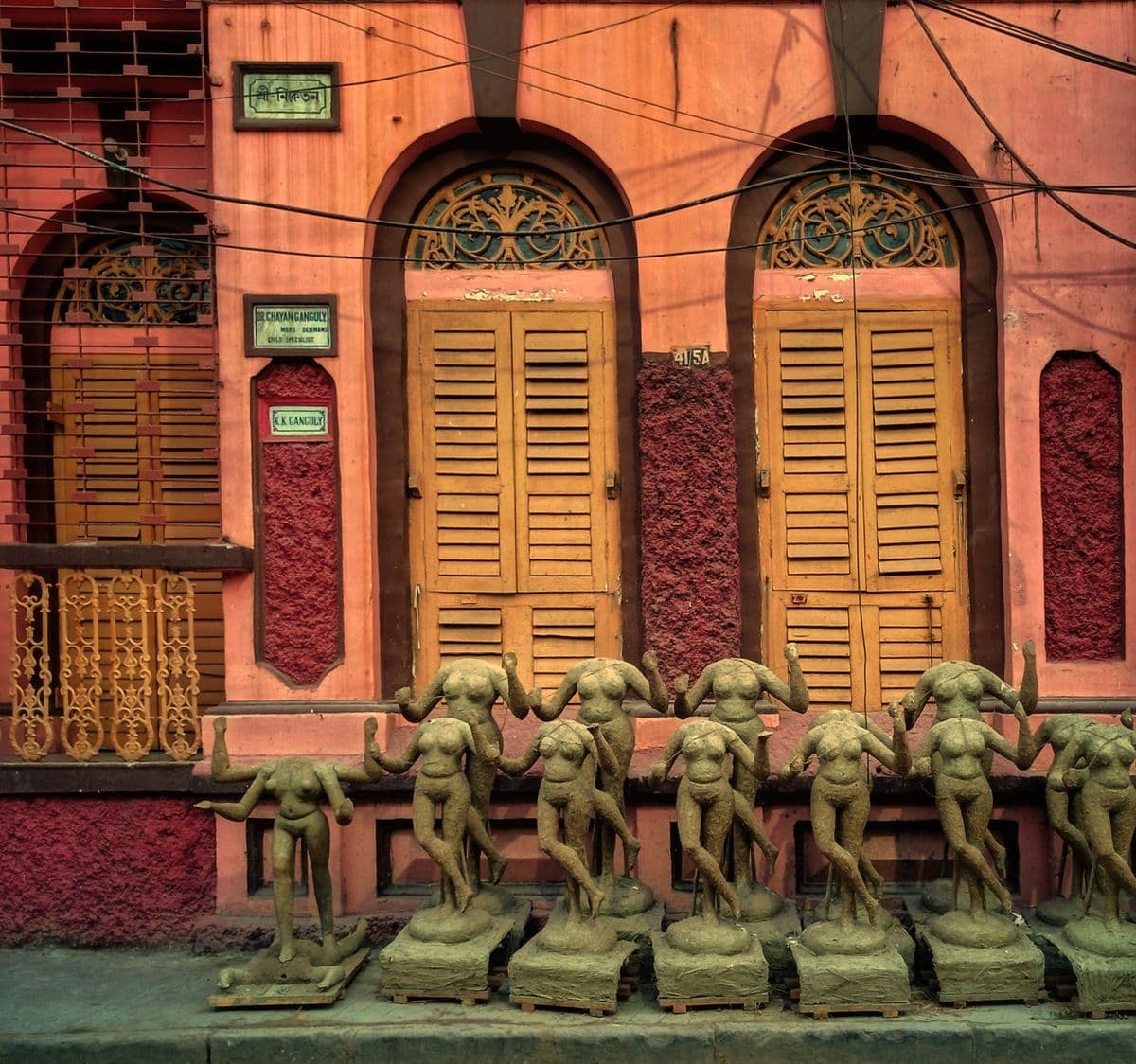
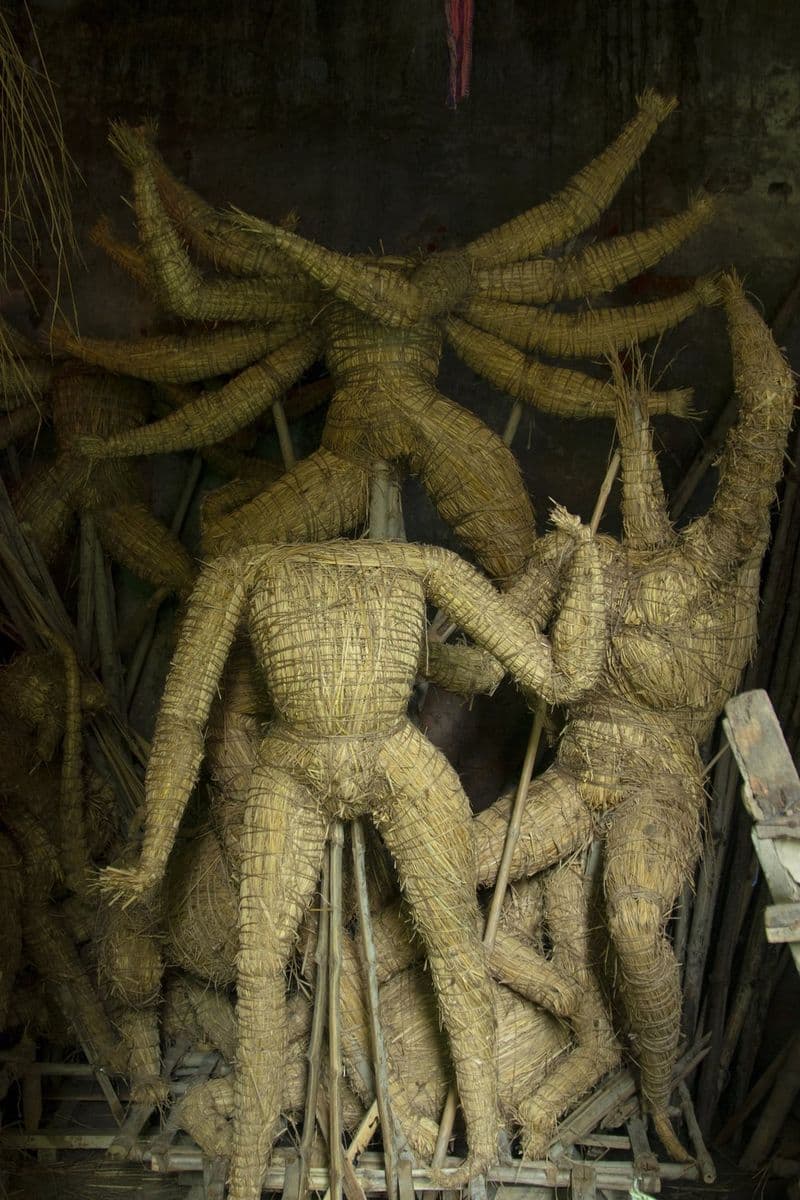
The armature, the kathamo (কাঠামো), is bansh (বাঁশ, bamboo) with sal or mango wood, lashed with pat dori (পাট দড়ি, jute rope). Over it bichali (বিচালি, rice straw) is bound tight into the rough body mass. Then two named coats of clay. Ek-mete (একমেটে, "first earth") is entel mati (এঁটেল মাটি), the sticky high-tensile alluvium of the Ganga bed, mixed with tush (তুষ, rice husk) so it does not crack as it shrinks; it dries three to four days. Do-mete (দোমেটে, "second earth") is fine sandy bele mati (বেলে মাটি), sometimes with jute-fibre pat mati, which rounds and smooths the anatomy over five or six days. Cracks between the coats are bridged with strips of cloth. Heads are moulded separately in wooden or clay moulds and joined. The final skin is Hooghly silt and khori mati (খড়ি মাটি), a chalk primer, then paint, then an organic varnish called gham tel (ঘাম তেল) rubbed in for sheen.
- কাঠামোkathamo
- The bamboo-and-wood armature of the idol, worshipped months before it is clothed in clay and often reused for generations.
- একমেটেek-mete
- "First earth" — the first coat of sticky clay mixed with rice husk, packed over the straw body.
- দোমেটেdo-mete
- "Second earth" — the finer sandy coat that models the anatomy.
- এঁটেল মাটিentel mati
- Sticky, high-tensile alluvial clay from the river bed, the structural clay of the image.
- বেলে মাটিbele mati
- Fine sandy clay used for the smoothing coat.
- চক্ষুদানchokkhu daan
- "The giving of eyes" — the final painting of the eyes, done by the senior artisan, traditionally at dawn on Mahalaya.
- একচালাekchala
- The classical form in which the whole family stands under one arched frame.
- ঘাম তেলgham tel
- Literally "sweat oil" — the organic varnish rubbed on at the end to give the painted skin its sheen.