Skip to content
All art forms

Contemporary

শারদীয়া সংখ্যা ও পুজো পরিক্রমা

Sharadiya Publishing and Pujo Parikrama

Kolkata; the Puja annual from the early 20th century, the broadcast parikrama from the late 20th

Where it stands

Thriving

ABP Pvt Ltd, publisher of Sharadiya Anandabazar Patrika, Desh and Anandamela; and the Asian Paints Sharad Shamman, the oldest of the puja awards

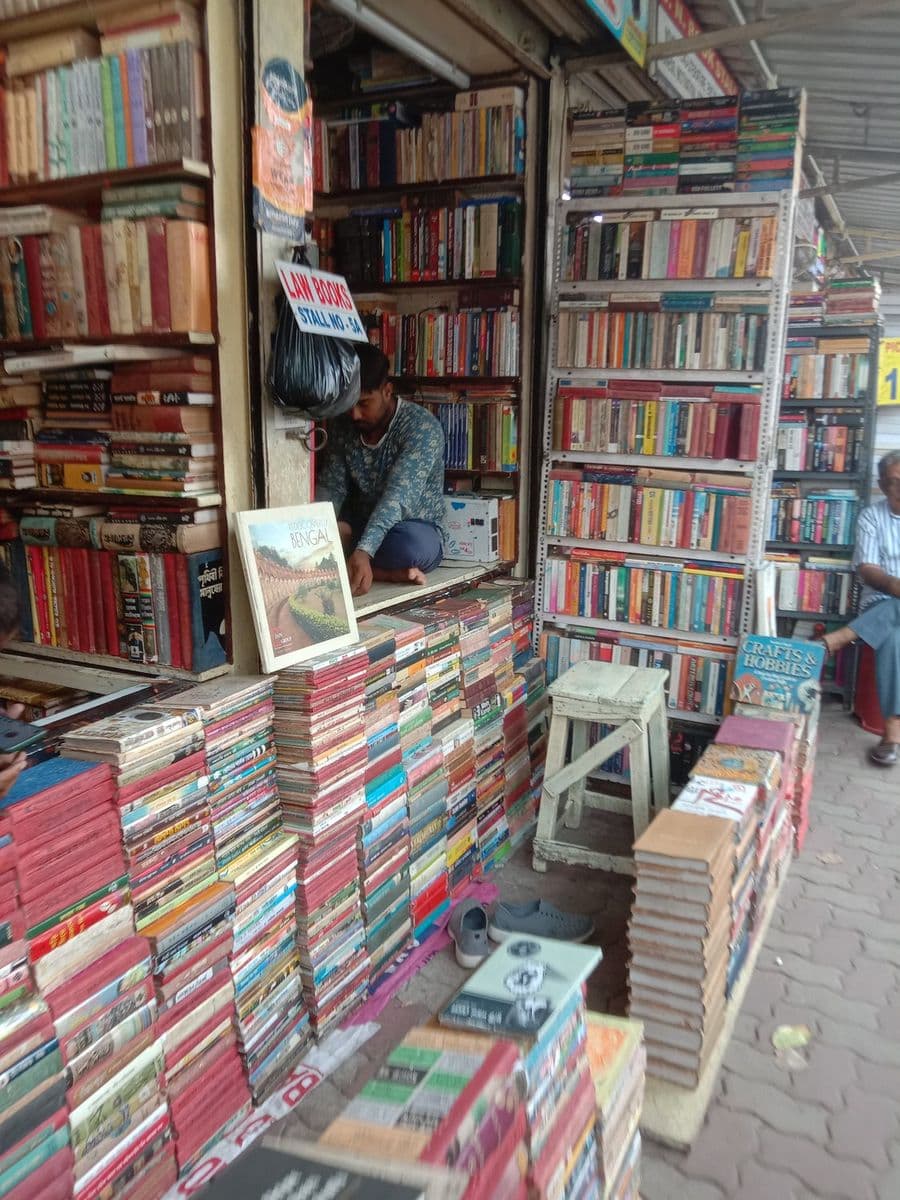
A College Street pavement stall in Kolkata, where the new Puja numbers appear each autumn and the old ones never leave.

A College Street pavement stall in Kolkata, where the new Puja numbers appear each autumn and the old ones never leave.Billjones94 (photograph by Yogabrata Chakraborty), CC BY-SA 4.0, via Wikimedia Commons

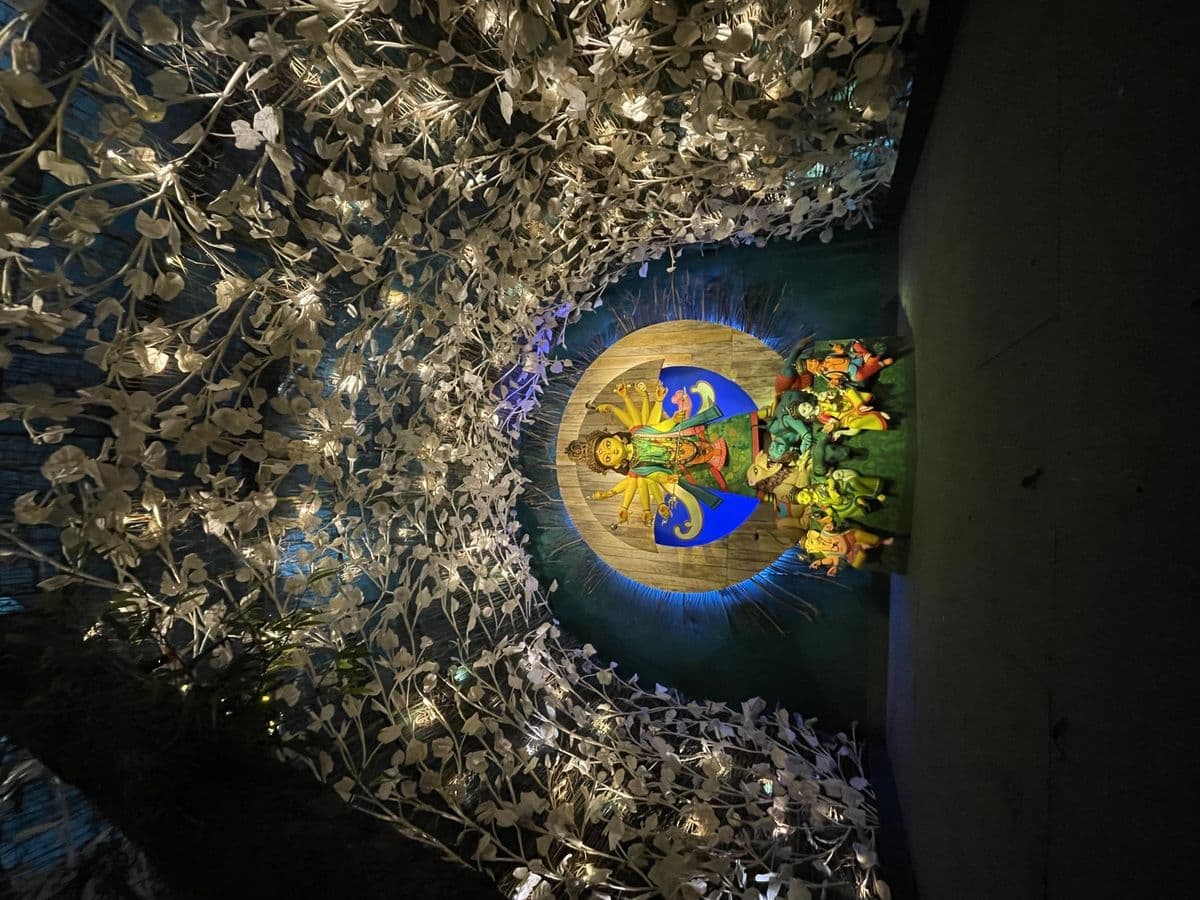
Bengal answers a festival with a book. Every autumn the Sharadiya Sankhya appear, fat special issues of Anandabazar, Desh, Anandamela, Shuktara, Sananda, carrying entire new novels, novellas and poems commissioned for the occasion. Most of Feluda and most of Byomkesh were first published in one. It is probably the largest simultaneous fiction release in any Indian language, and its covers sustain a continuous illustration tradition running from Satyajit Ray onward. The other half of the same impulse is pandal-hopping made into media, the Pujo Parikrama broadcast touring pandals live, the Sharad Shamman awards ranking them, the photographers, and now the vertical reel, which has quietly begun to change how pandals are designed.

ইতিহাস History

Where it came from

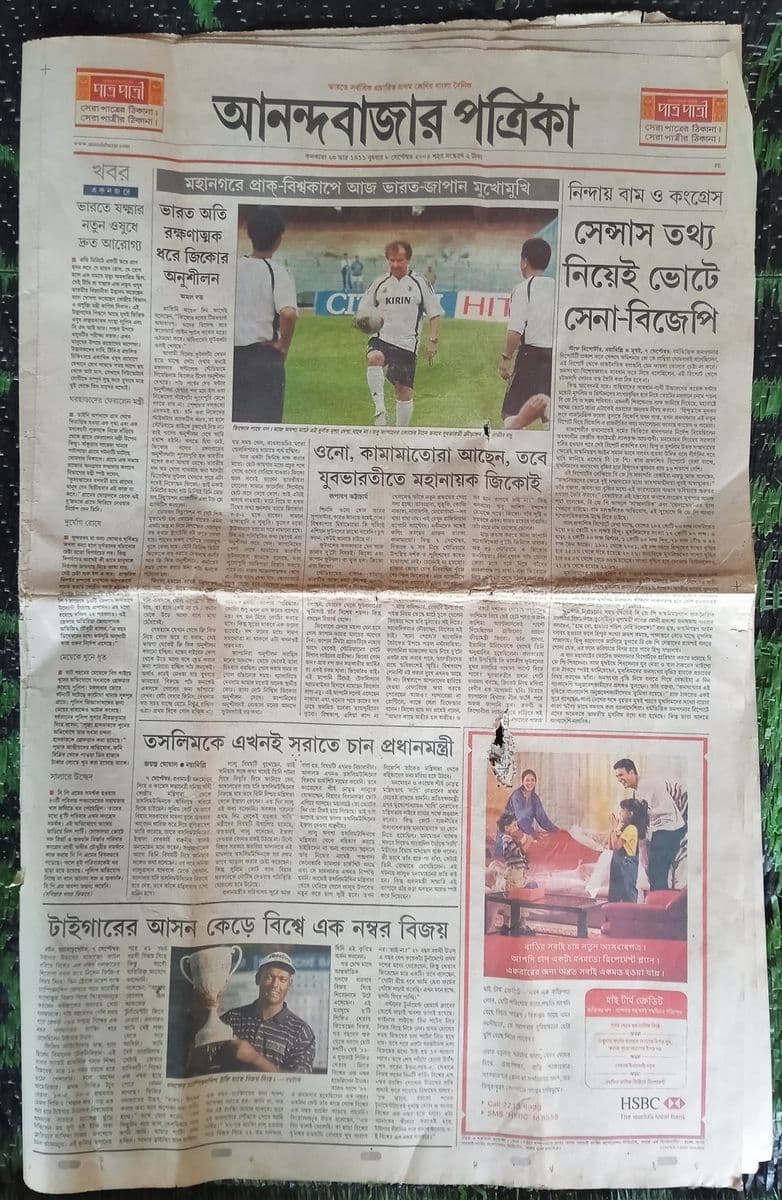
Bengal answers a festival with a book. The habit begins in the nineteenth century: the first Bengali festive collection, Chhutir Samachar, was conceived and edited by the Brahmo reformer Keshab Chandra Sen. It became an institution in the twentieth. Anandabazar Patrika, founded in 1922, brought out its first Sharadiya number in 1926. Desh was launched on 24 November 1933 and published its first autumn issue in 1341 of the Bengali era, 1934. The children's magazine Anandamela first appeared in March 1975 and its October issue grew to nearly four hundred pages.

The form settled quickly and has not changed much: three to four hundred pages, five or six complete new novels, plus novellas, short stories, poems, plays, essays, travel writing and, in the women's and lifestyle titles, recipes and fashion. Everything is commissioned for the issue. This is why so much canonical Bengali fiction has an autumn date attached to it. Satyajit Ray published Feluda in Sharadiya Desh — Gangtokey Gondogol in 1970, Sonar Kella in 1971, Baksho Rahashya in 1972, Kailashey Kelenkari in 1974 — and Sunil Gangopadhyay's Kakababu novels appeared the same way in Anandamela. Saradindu Bandyopadhyay's Byomkesh stories likewise ran largely in periodicals and Puja numbers rather than as books first.

The second half of the phenomenon is the guide to the pandals. Once there were awards worth winning — Asian Paints began the Sharad Shamman in October 1985 — there were rankings, maps, lists and routes, and the press built an industry on them. Pujo parikrama, literally the circumambulation of the pujas, moved from a printed route in a newspaper to a live broadcast: Kolkata's FM stations run continuous Puja programming, television channels tour the best-known pandals on air, and since the 2020s ZEE5 has streamed a five-day live Pujo Parikrama. A festival that had always been walked became a festival that could be watched.


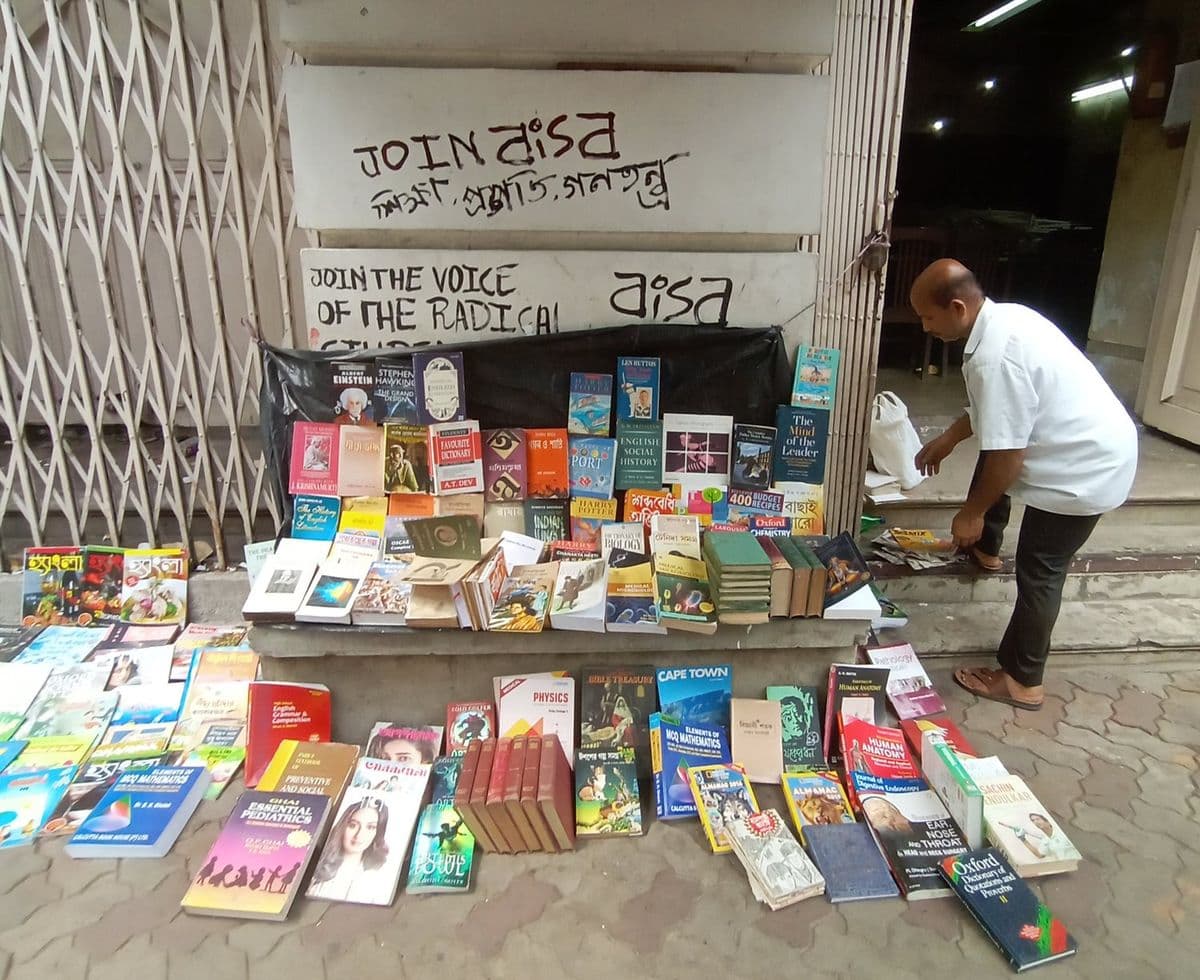
Second-hand books at College Street: decades of Sharadiya numbers circulate here long after their year has passed.
Second-hand books at College Street: decades of Sharadiya numbers circulate here long after their year has passed.Billjones94 (photograph by Yogabrata Chakraborty), CC BY-SA 4.0, via Wikimedia Commons

সংস্কৃতি Culture

Who does it, and who used to

Reading is part of the observance. A Bengali household buys new clothes and buys the Sharadiya, and the issues are read aloud, argued over and kept; second-hand Puja numbers from decades back are a staple of the College Street pavement trade. The publishing world is bhadralok and Kolkata-centred — the same houses, the same prize circuit, the Ananda Puraskar — and it has historically been dominated by male editors and male authors, with the women's titles, Sananda chief among them, carved out as a separate commercial category rather than integrated.

The parikrama has its own etiquette and its own class geography. Families walk their own para's puja, then queue for the famous ones, then go out by car at two in the morning to beat the crowds. The award circuit has changed the routes: a puja that wins Sharad Shamman or one of its imitators will be mobbed the following night, which is precisely what the sponsors are paying for.

Both halves have the same function. The Sharadiya and the parikrama broadcast both tell a dispersed Bengali public — in Kolkata, in the districts, in Bengaluru, in New Jersey — what this year's festival consists of. For the diaspora, who cannot walk the route, the magazine and the live feed are the festival, and both sell accordingly.

Anandabazar Patrika, founded 1922, which published the first Sharadiya Sankhya in 1926 and started the whole habit.
Anandabazar Patrika, founded 1922, which published the first Sharadiya Sankhya in 1926 and started the whole habit.Xzantiyamoloy, CC BY 4.0, via Wikimedia Commons

তাৎপর্য Significance

Why this, and not something else

The Sharadiya Sankhya is, by volume, probably the largest simultaneous release of new fiction in any language anywhere. Several dozen titles, each carrying multiple complete novels, all commissioned for one date, all bought in one fortnight, every year for a century. Bengali literature has an annual harvest, and it is timed to a religious festival.

It has also kept an illustration tradition continuously employed. Puja number covers and interiors are commissioned work with a recognisable line running from Satyajit Ray, who designed and illustrated his own, through generations of magazine artists, in a country where almost no other market for commercial illustration survived the end of the printed weekly.

The parikrama does the reverse thing. It takes an event that only exists in the street and turns it into a broadcast, a ranking and a map — which flattens it, and also means that a Bengali in Bengaluru who has not been home in five years knows which pandal won this year. Between the book and the broadcast, Durga Puja is one of the very few festivals anywhere that generates a substantial new literature and a substantial new body of criticism about itself, annually, and then does it again.

The crowd at Hindustan Park in October 2023: the parikrama on foot, which the broadcasts and rankings now direct.
The crowd at Hindustan Park in October 2023: the parikrama on foot, which the broadcasts and rankings now direct.Pramanikshreya, CC BY-SA 4.0, via Wikimedia Commons

কীভাবে How it is made

The work itself

A Sharadiya number is commissioned from the spring: the editor places novels, novellas and stories with named writers to a length and a deadline, commissions a cover painting and interior line illustrations, and closes copy in late summer for an August or early September release. The standard object is a perfect-bound magazine of 300 to 400 pages on newsprint or light coated stock, with a full-colour painted cover, priced deliberately low, sold from newsstands, footpath stalls and the College Street trade. Children's titles like Anandamela and Shuktara run comics and illustrated serials alongside prose. The parikrama side is a different craft: pandal route maps and rankings printed in the dailies, a panjika consulted for the timings, radio jockeys broadcasting from inside the pandals, and camera units running live feeds that cut between thirty or so committee pujas over five days. The technical problem in both is the same — the deadline is fixed by the moon and cannot move.

শারদীয়া সংখ্যাSharadiya Sankhya
The autumn number: the fat annual special issue of a Bengali magazine, carrying complete new novels commissioned for it.
পূজাবার্ষিকীPujabarshiki
Puja annual; the other common name for the same object, used especially for the children's titles.
পুজো পরিক্রমাPujo parikrama
The circuit of the pandals, walked or driven; now also the broadcast and streamed tour of the same route.
শারদ সম্মানSharad Shamman
The Asian Paints award, running since October 1985, whose rankings reshape the parikrama routes each year.
পঞ্জিকাPanjika
The Bengali almanac that fixes the exact timings of each rite, and therefore the deadline every editor and broadcaster works to.
আনন্দ পুরস্কারAnanda Puraskar
The literary prize of the ABP group, the most prominent award in the same publishing ecosystem as the Sharadiya numbers.
বইপাড়াCollege Street / Boi Para
Kolkata's book quarter, where new Puja numbers are sold from the pavement and old ones are traded second-hand for decades.
প্রচ্ছদPrachchhad
The cover illustration, commissioned as painted artwork and one of the last paid markets for illustration in India.

কাহিনি The stories

What people tell each other about it

Feluda's publication schedule

Satyajit Ray wrote Feluda to a festival deadline. The stories appeared first in Sharadiya Desh, the autumn number of the magazine launched in 1933 — Gangtokey Gondogol in 1970, Sonar Kella in 1971, Baksho Rahashya in 1972, Kailashey Kelenkari in 1974 — and were collected as books afterwards. Ray designed and illustrated them himself. So the most widely read Bengali detective fiction of the twentieth century exists in the shape it does partly because a magazine needed a complete novel of a particular length by a date fixed by the lunar calendar, every single year.

1926, and the invention of the Puja number

The fashion for the Puja number is usually traced to Anandabazar Patrika, which had been founded in 1922 and brought out its first Sharadiya Sankhya in 1926. Desh followed after its launch on 24 November 1933, publishing its first autumn issue in 1341 of the Bengali era. The earliest ancestor is older still: Chhutir Samachar, the holiday collection conceived and edited by Keshab Chandra Sen. Within twenty years of 1926 the format was fixed — several hundred pages, several complete new novels, everything commissioned — and it has not meaningfully changed since.

Four hundred pages for children

Anandamela began in March 1975 as a children's fortnightly, and its October Puja issue became one of the largest things published for children in any Indian language: close to four hundred pages, carrying a new full-length Kakababu adventure by Sunil Gangopadhyay, a full-length Feluda comic adapted from Satyajit Ray, serialised fiction, comics and puzzles. Generations of Bengali children date their reading by it. It is also, in effect, an annual commissioning programme for Bengali illustrators, which is one reason a market for painted commercial illustration survived in Bengal after it had died almost everywhere else in India.

From a printed route to a live feed

Pujo parikrama began as something you did with your feet and a map printed in the newspaper. Once the Asian Paints Sharad Shamman started in October 1985 and the rankings became news, the press had a product: routes, best-of lists, crowd forecasts. Radio followed, with Kolkata's FM stations broadcasting continuously from inside the pandals; then television, with on-air shows touring thirty or so of the largest community pujas. Since the 2020s ZEE5 has streamed a five-day live Pujo Parikrama. The festival now has a viewing figure as well as a footfall, and the two are managed by different people.

দেখুন Watch

Pujo maney bibhinno potropotrikar pujosonkhyaEditorji BengaliA news report on the Puja-number trade itself, filmed at the Kolkata stalls where the annual issues are sold.
Sharadiya Desh Patrika: PujabarshikiFinding BookA walk through a current Sharadiya Desh issue, which shows the physical object and its contents rather than describing it.

এখন Now

What state it is in

The Sharadiya market is still large. The established titles — Anandabazar Sharadiya, Desh, Anandamela, Shuktara, Sananda, Nabakallol, Bartaman, Anandalok, Sharadiya Bhraman, Kishore Bharati — appear every year, and one newspaper survey counted around five thousand Bengali Puja publications worldwide once non-commercial, institutional, diaspora and e-format issues are included. PDFs circulate freely and illegally within days of release, which the publishers have absorbed rather than solved. The parikrama has moved decisively online: FM stations still broadcast, but the competitive space is now streaming, with ZEE5 running a five-day live Pujo Parikrama, plus 360-degree pandal apps, live maps and the whole apparatus of crowd-routing. The consistent losers are the writers, whose per-page rates have not tracked the price of newsprint, and the illustrators, whose commissioned covers are now one of the last paid markets for painted illustration in India.

যা দেবী সর্বভূতেষু বুদ্ধিরূপেণ সংস্থিতা। নমস্তস্যৈ নমস্তস্যৈ নমস্তস্যৈ নমো নমঃ॥

To the Goddess who abides in all beings as intelligence, salutation, salutation, salutation again and again.

Devi Mahatmya 5.20