Skip to content
All art forms

Contemporary

পুজোর গান

Pujor Gaan and the Puja Release

Calcutta; the HMV / Gramophone Company Puja slate, c. 1930s to 1990s

Where it stands

Evolving

Saregama India, successor to HMV and custodian of the Puja song archive; and SVF Entertainment, Kolkata's dominant Puja-release film studio

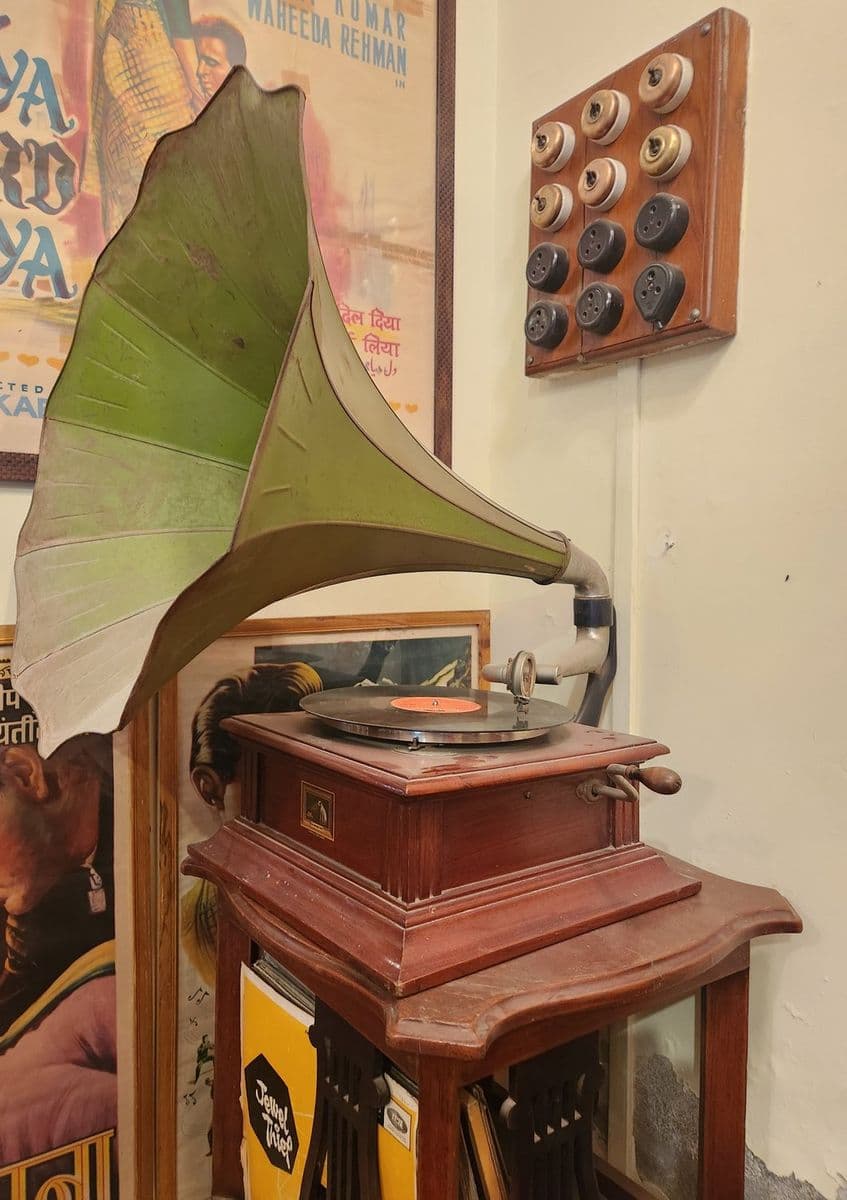
An HMV gramophone: the label whose Calcutta plant, opened at Dum Dum in 1907, set the Bengali music year to the festival.

An HMV gramophone: the label whose Calcutta plant, opened at Dum Dum in 1907, set the Bengali music year to the festival.Amitbalani, CC0, via Wikimedia Commons

For half a century, the most important date in the Bengali music calendar was the Puja release. Every autumn HMV issued a slate of brand-new Bengali songs, not film songs, songs written and recorded specifically for the festival, by Hemanta Mukhopadhyay, Shyamal Mitra, Manna Dey, Sandhya Mukhopadhyay, Kishore Kumar, Lata Mangeshkar. The company even printed the year's lyrics in a magazine called Sharod Arghya so that people could learn them. Records were bought in the weeks before Puja and then played round the clock at the pandals for four days. A whole national repertoire was released, learned and consumed inside one week. The films now do the same thing, Durga Puja is Bengali cinema's biggest window of the year.

ইতিহাস History

Where it came from

The Gramophone Company came to Calcutta in 1901 as the Indian branch of the British firm, and in 1907 it opened a record pressing plant at Dum Dum — the first anywhere outside the United Kingdom. Its label was His Master's Voice. That factory is the reason the Bengali recording industry exists, and it is also why the industry's calendar was set by a Hindu festival: a record company with a local plant, a local repertoire and a market that bought music in one concentrated season built its whole year around that season.

The mechanism was the Puja release. Each autumn HMV issued a slate of entirely new Bengali songs — not film songs, songs written, composed and recorded specifically for the festival — and announced them in an elaborate printed catalogue called Sharod Arghya, brought out shortly before Vishwakarma Puja, a couple of months ahead of Durga Puja. Sharod Arghya listed the year's artists, summarised their earlier work and carried the lyrics, so that buyers could learn the songs before the records reached the shops. The catalogue ranged across Atulprasadi and Dwijendrageeti and the modern Bengali song, and by the middle of the century its lead names were Hemanta Mukhopadhyay, Shyamal Mitra, Manna Dey, Sandhya Mukhopadhyay, Manabendra Mukhopadhyay, Dwijen Mukhopadhyay, and the visiting stars Lata Mangeshkar and Kishore Kumar.

Kazi Nazrul Islam was on the Gramophone Company's staff from 1928 to 1932 as lyricist, composer and voice trainer, and much of the vast body of song he produced there — including his Shyama Sangeet — went out through the same seasonal machinery and then onto radio.

The system peaked in the 1950s, 1960s and 1970s, the period usually called the golden age of Bengali adhunik gaan. In 1961 Madhuri Chattopadhyay's Puja release carried two songs by Salil Chowdhury. In 1967, Sudhin Dasgupta and Salil Chowdhury each presented Puja albums of ten songs. Vinyl gave way to cassette in the 1980s, the slate widened, and by the 1990s the biggest Puja hits were coming from playback singers: Kumar Sanu's Priyotoma Mone Rekho, issued by HMV in the early 1990s with music by Arup-Pranoy and lyrics by Pulak Bandyopadhyay and Gautam Saha, was played in pandals for years afterwards. The Gramophone Company of India renamed itself Saregama in 2000. The Puja slate as an annual institution did not survive the end of physical retail.

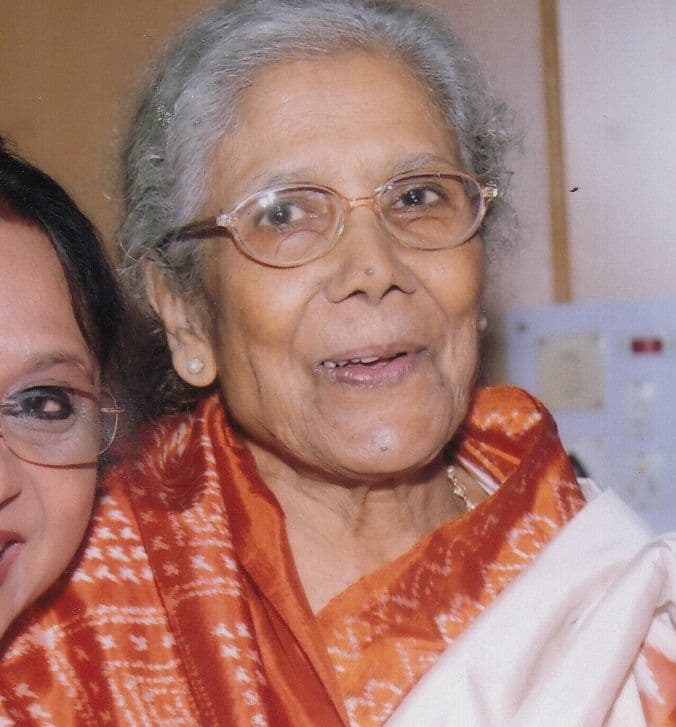
Sandhya Mukhopadhyay, one of the voices who carried the annual HMV Puja slate through its golden age.
Sandhya Mukhopadhyay, one of the voices who carried the annual HMV Puja slate through its golden age.Pratik6753, CC BY-SA 4.0, via Wikimedia Commons

সংস্কৃতি Culture

Who does it, and who used to

The Puja release worked because of how Bengalis bought music: not continuously, but once a year, in the weeks before Mahalaya, as part of the same shopping that produced new clothes. Records were bought in that fortnight and then played from loudspeakers at the pandal for four days straight, which meant a national repertoire was released, learned and saturated inside a single week. By Dashami everyone knew the songs. By the next autumn they were old, and a new slate arrived.

This gave a small number of people extraordinary reach. The singers were bhadralok professionals, mostly Hindu, mostly Calcutta-based, and the lyricists — Gauriprasanna Majumdar, Pulak Bandyopadhyay, Shyamal Gupta — were as famous as the singers, which is unusual anywhere. Women had a genuinely central place as performers, with Sandhya Mukhopadhyay, Utpala Sen, Arati Mukhopadhyay and Nirmala Mishra carrying as much of the annual slate as the men. They had almost no place as composers or producers, and none at all in the company.

The counterpart at the pandal was the loudspeaker, mounted on bamboo, run at volumes that have since been restricted by court order. The Puja song is inseparable from that delivery: it was written to be heard from a distance, at the edge of a crowd, over conversation, which is why so much of the repertoire is melodically simple and lyrically direct.

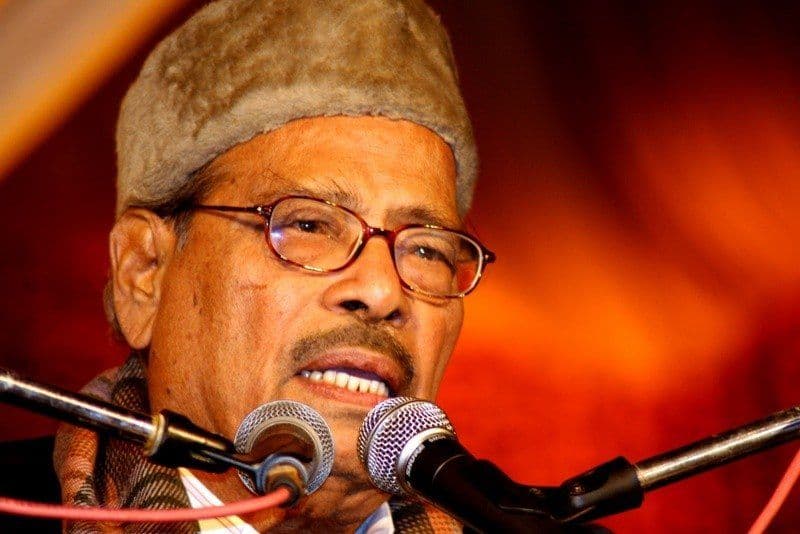
Manna Dey, whose Bengali Puja releases remain among the most played recordings at Kolkata pandals.
Manna Dey, whose Bengali Puja releases remain among the most played recordings at Kolkata pandals.Ramesh Lalwani, CC BY 2.0, via Wikimedia Commons

তাৎপর্য Significance

Why this, and not something else

No other Indian language ever had this. A record label, an annual festival and a reading public combined into a system in which several dozen brand-new songs were commissioned, recorded, catalogued with their lyrics, released on a fixed date, and absorbed by an entire population within about ten days. It is the closest thing twentieth-century India had to a national playlist with a publication schedule, and it ran for roughly half a century.

The consequence is that Bengali popular memory is organised by year in a way that very few musical cultures are. People can date their lives by which song came out in which Puja. The songs themselves are unusually literary, because the lyricist was a named figure with a reputation to keep and the lyrics were printed in advance in Sharod Arghya for anyone to judge.

The system is gone and the habit is not. The same autumn slot is now occupied by Bengali films, which release at Puja and live or die in that week, and by streaming singles timed to Mahalaya. What was a record industry's commercial calendar has outlived the record industry, because the audience never stopped expecting something new in the last week of Ashwin.

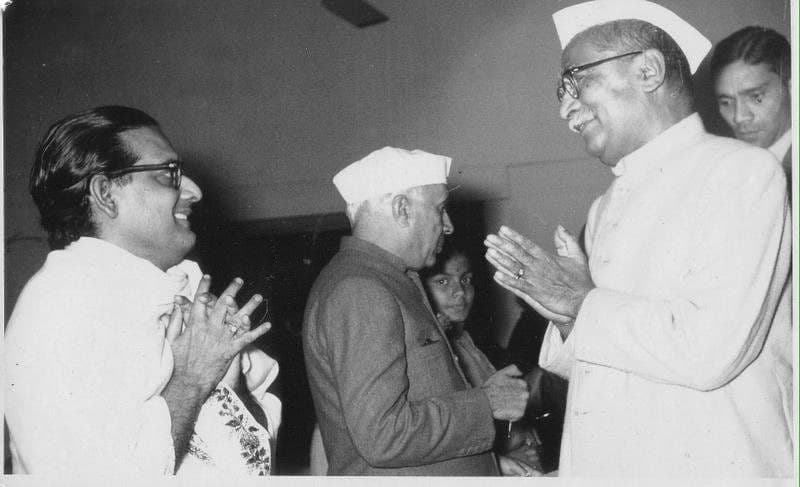
Hemanta Mukhopadhyay in 1950, at the start of the two decades in which he dominated the annual Puja slate.
Hemanta Mukhopadhyay in 1950, at the start of the two decades in which he dominated the annual Puja slate.Unknown author, public domain, via Wikimedia Commons

কীভাবে How it is made

The work itself

A Puja song is a Bengali adhunik gaan: a modern, non-film, through-composed song of three to five minutes, in Bengali, for solo voice with orchestra. The structure is conventional — an instrumental prelude, then sthayi, antara, and a return, with an interlude between stanzas. The orchestration of the golden age is a hybrid: Hindustani-derived melody and ornament over a studio ensemble of violins, cello, flute, mandolin, guitar, accordion, piano, tabla, dholak and bongo, arranged by the music director. Recording was direct to disc, then to tape from the 1950s, cut at Dum Dum and pressed on shellac 78 rpm until the late 1950s, then vinyl EP and LP, then cassette from the 1980s. The three credited roles are gitikar (lyricist), surokar (composer) and shilpi (singer), and in the Puja slate all three were advertised by name in Sharod Arghya months before release.

পুজোর গানPujor gaan
The Puja song: a new Bengali song written, recorded and released specifically for the autumn festival season.
শারদ অর্ঘ্যSharod Arghya
HMV's printed Puja catalogue, issued before Vishwakarma Puja, listing the year's new releases with their lyrics.
আধুনিক গানAdhunik gaan
Modern song: the non-film Bengali solo song with orchestra that made up most of the Puja slate.
গীতিকারGitikar
Lyricist. In Bengal the lyricist is credited and known by name, which is why Gauriprasanna Majumdar is as famous as the singers.
সুরকারSurokar
Composer or music director, who writes the tune and arranges the studio orchestra.
শ্যামা সঙ্গীতShyama Sangeet
Songs to Kali, a major genre of the Puja slate and the tradition from which the Agomoni repertoire descends.
এইচএমভি / সারেগামাHMV / Saregama
His Master's Voice, the Gramophone Company of India's label; the company renamed itself Saregama in 2000.
মহালয়াMahalaya
The day that opens the festival fortnight, and the deadline by which the year's new songs had to be in the shops.


কাহিনি The stories

What people tell each other about it

A catalogue with the words printed in it

Sharod Arghya was not an advertisement, or not only one. HMV brought it out shortly before Vishwakarma Puja, roughly two months ahead of Durga Puja, listing the year's forthcoming Bengali releases with the artists, a summary of their earlier work, and — the crucial part — the lyrics of the new songs. The point was that people should be able to learn the words before the records arrived. A commercial catalogue was doing the work of a songbook, and the effect was that a new national repertoire could be sung by the crowd rather than only played at it. Nothing comparable existed in any other Indian language.

Nazrul on the payroll

Between 1928 and 1932 Kazi Nazrul Islam was employed by the Gramophone Company in Calcutta as lyricist, composer and trainer of singers. He wrote at an industrial rate, and the output included ghazals, kirtan, Islamic devotional songs and Shyama Sangeet — hymns to Kali — written by a Muslim poet for a Hindu festival market and pressed at Dum Dum. Those records fed directly into radio, which was starting up in the same city at the same time. A great deal of what is now treated as timeless Nazrulgeeti was in fact produced to a record company's seasonal deadline.

Ten songs each, 1967

In 1967 both Sudhin Dasgupta and Salil Chowdhury presented Puja albums of ten new songs apiece, which is a measure of how much the system could absorb in one autumn. Six years earlier, in 1961, Madhuri Chattopadhyay's Puja release had carried two songs composed by Salil Chowdhury. These were not film songs recycled; they were written for the slate, printed in Sharod Arghya, and released to a date. A composer's reputation in Bengal was made in the fortnight before Mahalaya, in public, against everyone else's new work, every single year.

A cassette that stayed in the pandals

The Puja release outlived vinyl. Kumar Sanu, by then the dominant playback voice in Hindi cinema, recorded Priyotoma Mone Rekho for HMV in the early 1990s, with music by the duo Arup-Pranoy and lyrics by Pulak Bandyopadhyay and Gautam Saha. It was a cassette, it was a Puja release in the old sense, and it was played in neighbourhood pandals year after year long after it stopped being new. It is the last clear case of the system working as designed, and by the end of the decade the retail structure that made it possible had begun to come apart.

দেখুন Watch

Anurodher Asar: Swarnajuger Pujor Gaan Vol. 1Saregama BengaliFrom the label's own catalogue: the golden-age Puja releases as HMV originally issued them, posted by the successor company.
Weekend Classic Radio Show: Pujor Gaan SpecialSaregama BengaliSaregama's own commentary programme on the Puja release system, with the recordings and their release context.
Top 20 Pujo Hits of Kishore KumarSaregama BengaliThe Bengali Puja recordings of a singer better known for Hindi playback, showing how the slate drew in national stars.

এখন Now

What state it is in

The annual Puja slate as HMV ran it is finished: physical retail collapsed, Saregama's business shifted to licensing its catalogue and to the Carvaan player, and no label now commissions several dozen new Bengali songs to a fixed autumn date. What survives is the calendar. Bengali cinema still opens its biggest films at Puja and settles its year in that week. Streaming platforms and Saregama itself release Puja compilations and new singles timed to Mahalaya, and the old slate has become the standard pandal soundtrack — Saregama's own Pujor Gaan playlists run to six hours and are among its most-played Bengali uploads. What has been lost is the specific thing that made the system work: a new, shared, simultaneously released repertoire that an entire population learned at once. The catalogue is now nostalgia, played from a phone through the same bamboo-mounted speakers.

যা দেবী সর্বভূতেষু বুদ্ধিরূপেণ সংস্থিতা। নমস্তস্যৈ নমস্তস্যৈ নমস্তস্যৈ নমো নমঃ॥

To the Goddess who abides in all beings as intelligence, salutation, salutation, salutation again and again.

Devi Mahatmya 5.20